Learning 2 Lead Leading 2 Learn

reflections on higher education, executive coaching, and leadership

  • Source:http://www.flickr.com/photos/matthewmcvickar/2107684920/sizes/z/in/photostream/

    Research suggests that effective teaching and learning environments: 1) facilitate a deep approach to learning where students are actively involved and seek further meaning and understanding through experience, application, practice and reflection; 2) provide organization and structure through clearly defined goals, learning objectives and standards for performance; 3) provide opportunities for students to receive frequent feedback; 4) provide authentic learning experiences that establish personal and real-world relevance; and, 5) provide opportunities for independence and choice (Entwistle and Tait, 1990; Trigwell and Prosser, 1991; deWinstanley and Bjork, 2002; Lizzio et al., 2002; Newmaster et al., 2006;  Weiman, 2007;  Kember and Hong, 2008; Revell and Wainwright, 2009).

    The following 3 strategies translate these fundamental concepts into action:

    1) Establish organization and structure

    • Establish and communicate clear learning objectives throughout the course
    • Establish and communicate clear standards for performance (e.g. rubrics and grading guidelines)
    • Give clear and useful explanations
    • Vary and structure learning activities (~20 min.) to focus attention
    • Focus each lesson/session on a few main concepts
    • Repeat and space key information within and between lectures/labs/seminar

    2) Keep Learners Intrinsically Motivated

    • Establish personal and real-world relevance
    • Provide opportunities for independence and choice in learning content and process
    • Provide opportunities to receive frequent feedback and to scaffold learning

    3) Involve the Learner

    • Provide opportunities for peer interaction and discussion
    • Provide opportunities for independent interpretation, elaboration and meta-cognition
    • Use activities that promote practice and problem-solving to facilitate synthesis, integration and application
    • Ask questions and demonstrate an interest in students’ opinion, and their challenges with the subject matter
    • Promote a sense of reciprocal learning and interaction by demonstrating a sense of enthusiasm, trust, approachability, honesty and humility

    References

    deWinstanley, P.A. and Bjork, R.A .2002.Successful lecturing: presenting information in ways that engage effective processing.  New Directions for Teaching and Learning 89:19-32.

    Entwistle, N. and Tait, H. 1990.  Approaches to learning, evaluations of teaching, and preferences for contrasting academic environments.  Higher Education 19: 169-194.

    Kember, D., Ho, A., and Hong, C. 2008. The importance of establishing relevance in motivating student learning. Active Learning in Higher Education 9(3): 249-263.

    Lizzio, A., Wilson, K., and Simons R. 2002.  University students’ perceptions of the learning environment and academic outcomes: implications for theory and practice.  Studies in Higher Education 27(1):27-52.

    Newmaster, S., Lacroix, C.A., and Rossenboon, C. 2006. Authentic learning as a mechanism for learner centredness. International Journal of Learning 13 (6): 103-112.

    Revell, A. and Wainwright, E. 2009.  What makes lectures ‘unmissable’? Insights into teaching excellence and active learning.  Journal of Geography in Higher Education 33(2): 209-233.

    Trigwell, K. And Prosser, M. 1991.  Improving the quality of student learning: the influence of learning context and student approaches to learning on learning outcomes.  Higher Education 22:251-266.

    Wieman, C. 2007. Why not try a scientific approach to science education? Change: The Magazine of Higher Learning 39(5): 9-15.

  • Source: http://www.flickr.com/photos/samhames/5250383314/sizes/m/in/photostream/

     “Large class sizes, the increasing diversity of the student corpus, and mounting cost-efficiency imperatives have become commonplace.  In this context, a major challenge for academic faculty is how curriculum, teaching and assessment can be enhanced so that graduates will become more effective communicators and meet the needs of contemporary knowledge economies” (p. 89).

    Moni et al. (2007) present an innovative writing and peer review process aimed at first-year students in a human biology course at a research-intensive university, which represents an alternative to more traditional essay-type assignments.  The students were required to write a 700-750 word personal response to one of a selected number of topics from The Science Show, broadcasted by the Australia Broadcasting Commission.  The text was to present a scaffolded- level of cognitive development from providing a context and purpose in the Introduction (remembering, understanding), to a personal analysis of the topic in the body of the report, to a judgement section where the students were required to communicate their personal interest in, and usefulness of the topic both in the context of self and to society.   In addition, they were required to present future research areas based on the discussion presented in the audio file.  The students were asked to peer review a pre-selected portion of exceptional assignments – a clever technique for having students exposed to high-quality work.

    This paper presents an interesting assignment for a first-year class.  A detailed marking rubric is outlined.   The students felt that the assignment challenged them to think about current issues and to effectively present scientific evidence in their writing.  An exemplary submission and peer review is provided in the paper.   The process of peer-reviewing exemplary work is intriguing, and may be beneficial in a first-year course where students often struggle finding “the right answer.”

    References:

    Moni, R.W., Moni, K.B., Lluka, L.J., and Poronnik, P. 2007.  The personal response:  a novel writing assignment to engage first year students in large human biology classes.  Biochemistry and Molecular Biology Education 35(2): 89-96.

  • Hazel et al. 2002 present a compelling exploration of meaningful/deep (in comparison to rote/surface) learning in terms of the relationship between students’ approaches to learning and their perceptions of the learning environment, within the context of biology.  Data was collected from 272 students from similar first year biology subjects at 2 Australian Universities.  The Presage-Process-Product model was used to guide the research: Presage (Student Characteristics, Course Design/Teaching Methods), Process (Students’ Perceptions of Context/Learning Environment, Students’ Approaches to Learning),  Product (Quantity and Quality of Students’ Learning Outcomes).  They used a pre/post test based upon open-ended questions and a concept mapping exercise to assess key concepts in photosynthesis.   Perceptions of the learning environment were evaluated via a questionnaire designed to evaluate deep/surface learning strategies, “good teaching”, clear goals, workload, assessment and independence.   A hierarchical cluster analysis was used to examine the data. Comprehensive details regarding these methods are provided.

    This paper is extraordinarily interesting and well-researched. Three clusters of students were identified: an understanding group, a reproduction group, and an incoherent group (which demonstrated the poorest understanding).  The reproduction group perceived the environment as more supportive of a surface-learning approach, and adopted a surface approach to learning.  The understanding group found that the learning environment was more supportive of a deep approach and hence adopted a deep learning approach.  It was noted that less than one third of the students demonstrated the deep/understanding learning pattern.  The results for the incoherent group were mixed, although they perceived that the learning environment was supportive of deep learning, they adopted more of a surface approach to learning and demonstrated significantly less prior-understanding (although all groups demonstrated a relatively low understanding in the pre-tests).  Perhaps most interesting, the reproduction groups’ understanding of photosynthesis decreased in the post-test, while the understanding group demonstrated an enhanced understanding of the topic, and higher achievement scores in comparison to the two other clusters.  The incoherent group demonstrated the lowest level of achievement and understanding.  The key findings suggest that perceptions of the learning environment and students’ approaches to learning can have a significant effect on their level of understanding of course concepts. The key questions that remains is, “…knowing that students do respond so differently to the same context, and that these differences are associated with differences in the quality of their learning, what can be done?  Our approach is to focus on students’ awareness of the requirements of their course when they start, and on differences between staff expectations and students’ conception of learning of their subject and of key concepts in their subjects.”  This study is well-researched and presented and highlights the importance of developing students’ awareness of both the process and content of subject-matter learning.  The pre/post methodology also provides an interesting research model.

    Reference:

    Hazel, E., Prosser, M. and Trigwell, K. 2002.  Variation in learning orchestration in university biology courses.  International Journal of Science Education 24(7): 737-751.

  • I attended an explorative session at the Society for Teaching and Learning in Higher Education (2011) Conference in Saskatoon, Saskatchewan. The session highlighted a Community-Based Art exibit at the University of Saskatchewan.

    http://stlhe2011.pathable.com/talks/18987

    Here is my personal poetic journey:


    LEARNING,

    LEADERSHIP,

    Passion & Compassion,

    Sympathy, Inspiration,

    Collaboration &

    CHANGE,

    Innovation, Tradition,

    Diversity & Culture,

    CONFIDENCE, Silence,

    Questioning & Insight.

    These are the words which guide my practice.


    Short burst of creativity inspired by STLHE2011!

  • What does learner-centredness mean to you?  How would you describe a learner-centred course?

    – inclusive design – understanding how different learners learn differently
    – active learning
    – mindful of other courses the student might be taking in their course of study, being mindful of flow
    – aligned and relevant (personal and real-world relevance)
    – there has to be responsibility placed on the student for their learning.  They are not just a sponge
    – active learning. deep learning.
    – creating environments for learning
    – One where there is a great deal of chaos. Learner centredness, seems to come in two flavours.

    Instructor acts as a facilitator.  Instructor as LEARNER.
    One is the ‘webquest’ style of learner centred design. This involves significant front end design work on the part of the facilitator or the instructional designer. Specific outcomes are desired and constrained ‘choices’ offered to the student. The student becomes the centre of those choices, but within a pre-defined rubric

    Open education, on the other hand, doesn’t do this. It allows the student to… ack. really have to go… http://wikieducator.org/User:Davecormier/Books/Educational_Technology_and_the_Adult_Learner i mean this stuff. It goes to a meeting and comes back later and finishes its thought.

    Fink’s 5 Principles of Course Design: http://honolulu.hawaii.edu/intranet/committees/FacDevCom/guidebk/teachtip/finks5.htm

    • Challenges students to HIGHER LEVEL LEARNING.
    • Uses ACTIVE FORMS OF LEARNING.
    • Gives FREQUENT and IMMEDIATE FEEDBACK to students on the quality of their learning.
    • Uses a STRUCTURED SEQUENCE OF DIFFERENT LEARNING ACTIVITIES.
    • Has a FAIR SYSTEM FOR ASSESSING AND GRADING STUDENTS.

    Constructive Alignment:
    http://www.springerlink.com/index/l2q3820h2436l607.pdf Biggs, 1996

    The benefits of Learning Objectives  (Simon and Taylor, 2009)

    • Improve Communication with students and other faculty
    • Provide Structure and Organization – streamline course, improve assessment
    • Enhance Student Learning – structure learning. focus attention

    Natasha’s summary:
    https://natashakenny.wordpress.com/2011/05/19/learning-objectives-do-they-really-work/

    Source doc:
    http://www.cwsei.ubc.ca/SEI_research/files/Life%20Sci/Simon_Taylor_ValueOfCourseSpecificLG.pdf

    THE CARL WIEMAN SCIENCE EDUCATION INITIATIVE – Achieving the most effective, evidence-based science education  (effective science education, backed by evidence)

    http://www.cwsei.ubc.ca/

  • Source: http://www.flickr.com/photos/mortsan/5431027284/sizes/m/in/photostream/

    One of the core foundations of creating or revising a course is to establish a set of learning objectives which clearly define what a student should know or be able to do by the end of a course. So, where is the evidence that this approach actually works?  Simon and Taylor (2009) set out to explore the impact that learning objectives (or course-specific learning goals) had on student learning  in three classes where the instructor had integrated objectives intentionally throughout their course.  Nearly all students agreed that learning objectives were very valuable and helped them approach their learning more effectively.  Specifically, they were seen to guide and direct students in “knowing what they need to know” (p.55).   Students valued the organization and structure established by these objectives, “which allowed them to organize the information more effectively and be more expertlike ”  (p.55).  They appreciated that instructors where explicit and direct in the topics, skills and concepts that were of most importance.  Students in this study stated that these objectives helped to focus and guide their attention in lecture. As one of the most common struggles I hear from instructors is maintaining student attention during the lecture, setting clearly defined learning objective seems like a relatively simple strategy to implement to address this concern!

    The course instructors felt that clearly defined learning objectives, improved communication in terms of what was covered/most important in the course, not only with students taking the course, but with other instructors.  This unanticipated outcome was seen as highly valuable when aligning a structured sequence of courses in the curriculum.  The instructors also felt that the objectives improved their assessment practices and helped them in preparing exam questions.   Specifically, they helped to ensure that there was alignment between their objectives with their assessment measures. Noted one instructor, “Your exam writes itself…I can check to see if each question addresses a learning goal and if it doesn’t I will throw it out” (p.56).

    There is no question that learning objectives help to provide organization and structure to course design and implementation.  From this study, we can also conclude 3 primary benefits of course learning objectives:

    1) they help to guide and enhance student learning

    2) they improve communication between students and other instructors

    3) they improve assessment practices.
    Reference:

    Simon, B. and Taylor, J. (2009) What is the value of course-specific learning goals? Journal of College Science Teaching. Nov/Dec: 53-57.

  • Source: http://www.flickr.com/photos/velkr0/3472576304/sizes/m/in/photostream/

    “It is one thing to recognize the benefit of engaging students in discussion yet quite another to master the skills necessary to effectively facilitate discussion” (Dallimore et al., 2004, pg. 104).

    The learning environment is in constant flux; what works one class may not constitute success in the next. To promote effective discussion, we must strive to adapt to the ever-changing classroom environment.  Dallimore et al. (2004) suggest students are encouraged to actively participate in classroom discussions when: participation is graded; the learners’ ideas and experiences are incorporated into the discussion; the facilitation is active; effective questions are asked; the classroom environment is supportive; and the instructor provides both positive and constructive feedback.

    In reference to their role in classroom discussions, Sautter (2007, pg. 124) states, “The most important role of the instructor  is one of shaping student behavior so that the students learn how to continuously improve in developing critical thought processes and well-constructed arguments.” Based on the recommendations provided by Davis (1993); Dallimore et al. (2004); McKeachie and Svinicki (2006);  Brookfield (2006); and,  Sautter (2007) an effective facilitator:

    • sets shared-expectations for democratic and quality participation and encourages input from all learners during discussions;
    • states a clear goal which outlines the purpose for each discussion;
    • purposefully avoids the temptation to respond to every comment, and encourages the learners to develop confidence in both their own ideas and their ability to respond to each other;
    • provides balanced feedback, by positively acknowledging insightful questions and points of discussion and identifying possible areas for improvement;
    • involves the learner in evaluating the discussion, “How did it go?” “What are some areas for improvement in terms of quality, contribution, participation and facilitation?”
    • varies the complexity of the questions asked to encourage different levels of thinking and that are, “…phrased somewhat broadly to challenge the students to take an active role in identifying concepts relevant to the discussion” (Sautter, 2007, pg. 124);
    • openly acknowledges that differences of opinion enrich discussion, diffuses excessive tension, and suggests points of clarification when needed;
    • is prepared to use a variety of methods of delivery (e.g. open discussion, brainstorming, small focus groups, pairing); and,
    • takes notes of key points and allows time for a collaborative summary such that everyone has time to assess and synthesize the information presented and discussed.

    The goal of any good classroom discussion is to increase learning and self-confidence.  To an instructor devoted to the expectation of an inspiring and engaging discussion, silence can be both intimidating and threatening. However, an effective discussion requires time for personal thought. Many authors emphasize the importance of providing time for students to think individually and to record some thoughts after posing a question for discussion (e.g. Davis, 1993; Brookfield, 1995; McKeachie and Svinicki, 2006).  This time can be enormously valuable in developing learners’ confidence and clarity in their knowledge, thoughts and ideas.  In smaller seminar settings, it may be appropriate to pose questions for discussion prior to class via email so that the learners come prepared for conversation. The “think-pair-share” technique, where students record some thoughts, pair up with another student to discuss their thoughts, and then share their collaborative ideas with the rest of the class may also work well.

    Instructors are often faced with the challenge of engaging students in the process of learning as well as the content of their learning, “…good education is always more process than product” (Palmer, 1998, pg. 94).  An inclusive and democratic discussion can inspire critical thinking, shared learning, and a deep appreciation and understanding of the course subject matter.

    “At the heart of discussion is the open and unpredictable creation of meanings through collaborative inquiry” (Brookfield, 2006, pg. 129).

    Brookfield, S.D. 2006. The Skillful Teacher. Jossey-Bass, San Fransisco, CA.

    Dallimore, E.J., Hertenstein, J.H., and Platt, M.B. 2004. Classroom participation and discussion effectiveness: student-generated strategies. Communication Education 53(1): 103-115.

    Davis, B.G. (1993) Tools for Teaching. Jossey-Bass Inc., US.

    McKeachie, W.J. and Svinicki, M. (2006) McKeachie’s Teaching Tips. Houghton Mifflin Company, New York.

    Palmer, P.J. 1998. The Courage to Teach. Jossey-Bass. San Fransisco, CA.

    Sautter, P. 2007. Designing discussion activities to achieve desired learning outcomes: choices using mode of delivery and structure. Journal of Marketing Education 29(2): 122-131.

  • Source: http://www.flickr.com/photos/earthisthering/5362387448/sizes/m/in/photostream/

    “A good discussion in one that leaves issues open for further inquiry and in which as many questions are raised as are answered” (Brookfield, 2006, pg. 119).

    There is little doubt of the benefits associated with classroom discussion.  In fact, discussion is one of the most touted and applied teaching strategies in higher education (Dallimore et al., 2004).   Effective discussions can:

    • increase the learner’s understanding of the subject matter;
    • promote the development of effective communication, active listening, and presentation skills;
    • encourage a deep appreciation for diverse points of view;  and,
    • enhance each learner’s confidence in their ability to embrace both the subject matter and the learning process.

    Discussion Norms

    What are the characteristics of an effective discussion, and how can we ensure that these are present within this learning environment?

    One of the most productive strategies for encouraging effective group discussion in any classroom setting is to establish group norms.   Brookfield (2006,  pg.124) recommends using a “Critical Incident Approach” where students are asked to establish these norms based on their personal reflections of the characteristics associated with their best and worst past discussion experiences.  The groups are then asked for a list of things that they could do to ensure that the positive characteristics exist, and the negative characteristics are avoided, thus forming a starting point to a set of common ground rules for future class discussions.

    Shared Expectations

    “Students should feel that you are genuinely interested in what they have to contribute” (McKeachie and Svinicki, 2006, pg. 24).

    It is important to set the stage early by ensuring that everyone participates in the first class discussion.  McKeachie and Svinicki (2006, pg.24) encourage instructors to not only carefully review the course objectives with the students at the start of the semester, but to involve them in the process of evaluating these objectives based on their shared expectations, by asking the following questions:

    • What have you heard about this course?
    • What do you hope to learn from this course?
    • What are your expectations for this course?
    • What are your expectations of me as an instructor?
    • What are your expectations of yourself as a learner?

    At this time, learners may be most comfortable contributing in small groups (3-5 people) prior to convening in an open class discussion (this strategy also helps encourage some level of participation from everyone in larger classes). The instructor then summarizes and lists common responses.  By having been asked for their contribution, learners become actively engaged in the importance of the syllabus and the purposeful organization and structure of the course.

    References

    Brookfield, S.D. 2006. The Skillful Teacher. Jossey-Bass, San Fransisco, CA.

    Dallimore, E.J., Hertenstein, J.H., and Platt, M.B. 2004. Classroom participation and discussion effectiveness: student-generated strategies. Communication Education 53(1): 103-115.

    McKeachie, W.J. and Svinicki, M. (2006) McKeachie’s Teaching Tips. Houghton Mifflin Company, New York.

  • Source: http://www.flickr.com/photos/21218849@N03/3482802808/sizes/o/in/photostream/

    Examples of program-level learning outcomes

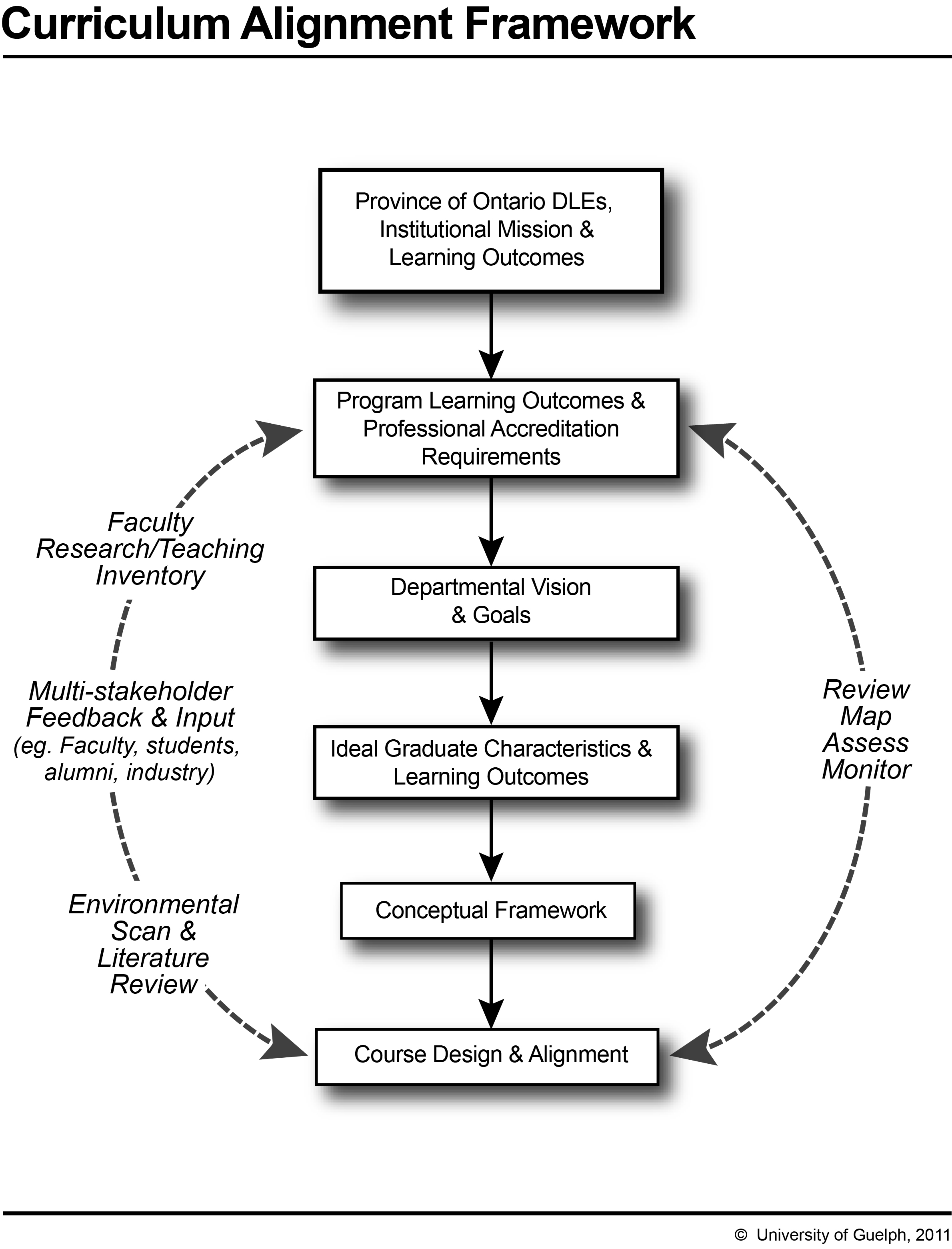
    I recently conducted a search for examples of program-level learning outcomes from a variety of institutions and disciplines.  The task turned out to be more challenging than I ever could have imagined, especially from the Canadian context. I firmly believe that every program at every institution should have early articulated and publically accessible learning outcome statements.  No one should be left to interpret the intended program learning outcomes from the compilation of courses in the Institution’s academic calendar – faculty, staff, or students (current, prospective and alumni).  Nor should these learning outcomes be hidden within reports, to be viewed only by internal and external program review committees.   They should inform and bring meaning to our everyday teaching and learning experiences. They should help to create a living curriculum, which is intentional and aligned, as well as continually monitored, reviewed and renewed based on a philosophy of continuous improvement.

    Here are a few examples of program-level learning outcomes from a variety of disciplines that I came across in my search.

    University of British Columbia, Materials Engineering

    Materials Engineers are experts on the entire life cycle of materials, including recovery of materials from minerals, making engineered materials, manufacturing materials into products, understanding and evaluating materials performance, proper disposal and recycling of materials, and evaluating societal and economic benefits. At the end of the program, students will be able to:

    1.      Characterize and select materials for design by evaluating the linkages between material properties, microstructures and processing.

    2.      Analyze materials engineering problems using a balance of mathematics, physics and chemistry including thermodynamics, mass, momentum and energy transport, kinetics and mechanics of materials.

    3.      Solve materials engineering problems. Identify and formulate problems, develop and apply analytical and experimental methods of investigation, identify contributing factors and generate, validate, and evaluate alternative solutions.

    4.      Design processes for the extraction, synthesis and processing of materials to meet technical, economic, environmental and ethical needs and constraints.

    5.      Communicate effectively in a professional environment through technical reports and presentations. Articulate and justify technical solutions to diverse audiences.

    6.      Recognize and evaluate the societal benefits of materials engineering. Appreciate and evaluate the environmental and societal impact of materials. Recognize the importance of professional and ethical responsibilities, the evolving nature of materials engineering and the importance of lifelong learning.

    http://www.mmat.ubc.ca/prospective_students/undergraduate/program/outcomes.php (accessed, Feb. 11, 2011)

    Qatar University, Department of Architecture and Urban Planning

    The objectives of the Bachelor of Architecture program are translated into a number of learning outcomes. These outcomes are directly related to the profession of architecture, the way in which it is practiced, and the knowledge components necessary for such a practice. The following list of outcomes represent the minimum learning outputs expected and therefore they are not exclusive. Specific exercises and individual and group projects may achieve additional learning outcomes:

    1.      An ability to conceptualize and coordinate designs, addressing social, cultural, environmental and technological aspects of architecture

    2.      An ability to recognize the dialectic relationship between people and the built environment in the GCC/Arab region

    3.      An ability to apply and integrate computer technology in design processes and products

    4.      An ability to utilize cutting edge building technology in design

    5.      An ability to apply visual and verbal communication skills at various stages of architectural design and project delivery processes

    6.      An ability to critically analyze building designs and conduct post occupancy evaluation studies

    7.      An ability to employ architectural research methods including data collection and analysis to assess and propose improvements in existing built environments

    8.      An ability to work collaboratively with teams of architects and various interdisciplinary design teams involved in the building industry

    9.      An ability to recognize diversity of needs, values, behavioral norms, social patterns as they relate to the creation of the built environment

    http://www.qu.edu.qa/engineering/architecture/programs/arch/outcomes.php (accessed Feb. 11, 2011)

    Academy of Art University, San Fransisco, Master of Fine Arts

    Graduates of the Academy of Art University will demonstrate the ability to:

    1. Produce a body of work suitable for seeking professional opportunities in their chosen field of art and design.
    2. Solve creative problems within their field of art and design, including research and synthesis of technical, aesthetic, and conceptual knowledge.
    3. Communicate their ideas professionally and connect with their intended audience using visual, oral, and written presentation skills relevant to their field.
    4. Execute technical, aesthetic, and conceptual decisions based on an understanding of art and design principles.
    5. Evaluate work in their field, including their own work, using professional terminology.
    6. Recognize the influence of major cultural and aesthetic trends, both historical and contemporary, on art and design products.
    7. Learn the professional skills and behaviors necessary to compete in the global marketplace for art and design.

    http://www.academyart.edu/interior-design-school/mfa_program.html (accessed Feb. 11, 2011)

    Indiana University – Purdue University Fort Wayne, Bachelor of Arts, Sociology

    The student learning outcomes for the degree are as follows:

    1.      Theoretical: Graduates will be able to analyze and evaluate major theoretical perspectives in sociology.

    a.      Graduates should be able to identify the general theoretical orientation.

    b.      Graduates should be able to apply theoretical analyses of social structure and social processes.

    c.       Graduates should be able to interpret social issues in terms of the major theoretical perspectives.

    2.      Methodological: Graduates will be able to utilize and evaluate research methods and data analysis used in sociology.

    a.      Graduates should be able to demonstrate appropriate use of both quantitative and qualitative methodologies.

    b.      Graduates should be able to evaluate different research methods.

    c.       Graduates should be able to interpret the results of data gathering.

    d.      Graduates should be able to demonstrate appropriate use of statistical techniques.

    e.      Graduates should be able to demonstrate competent use of statistical software.

    3.      Critical Thinking: Graduates will be able to evaluate critically arguments and situations.

    a.      Graduates should be able to critically evaluate theoretical arguments.

    b.      Graduates should be able to develop evidence-based arguments.

    c.       Graduates should be able to critically evaluate published research.

    4.      Communication Skills:  Graduates will be able to communicate effectively in both written and oral form.

    a.      Graduates should be able to write a research report.

    b.      Graduates should be able to develop an oral research report.

    5.      Professional Ethics: Graduates will be knowledgeable of appropriate ethics concerning both professional conduct and the use of human subjects.

    a.      Graduates should demonstrate a mastery of the ethical standards for conducting research with human subjects.

    b.      Graduates should demonstrate an understanding of the ethical standards of the American Sociological Association.

    http://bulletin.ipfw.edu/preview_program.php?catoid=19&poid=3609&returnto=search (accessed Feb. 11, 2011)

  • Source: http://www.flickr.com/photos/25422151@N04/4078247284/

    One of the most critical and challenging steps in curriculum development is developing a list of learning outcomes that bring life, coherence, meaning and intentionality to the collection of courses which make up a curriculum. Learning outcomes are broad, yet direct statements that describe the competences that students should possess (i.e. what students should know and be able to demonstrate) upon completion of a course or program (Harden, 2002; Kennedy et al., 2006).  They focus on broadly defined complex abilities that can be both demonstrated and observed (Harden, 2002). Learning outcomes may be presented separately to represent the cognitive, psychomotor and affective domains, but often cover a range of interacting knowledge, skills and attitudes that reflect the complexities inherent to the process of learning, and represent the essential, enduring and integrated learning that a graduate of a course or programme should possess (Harden, 2002; Soulsby, 2009).

    Note: for further details and examples related to the domains of learning see Marzano and Kendall, 2007; Kennedy et al., 2006; Anderson and Krathwohl, 2001; Bloom et. al., 1956; 1964.

    How DO you write a learning outcome?

    Learning outcomes should state the specific knowledge, skills and attitudes that an ideal graduate of the program should demonstrate, and the depth of learning that is expected.   Preparing 8-12 well-written and representative program-level learning outcomes (Harden, 2002) is usually one of the most challenging, yet important tasks a curriculum committee can undertake.  It is very important to develop learning outcomes that align directly with program, college and university-level mission statements.  Collaboratively reflecting upon and discussing these mission statements is often a valuable first step when developing and/or revising your program’s learning outcomes.

    Kennedy et al (2006, p.18) and Soulsby (2009) provide the following advice for preparing a LO:

    • The LO should complete a phrase describing what students should know and/or be able to do by the end of the program (e.g. “By the end of this program successful students will be able to…”).
    • The LO should start with an action verb, followed by a statement specifying the learning to be demonstrated, and finally a statement (or statements) to give it context and to identify a standard for acceptable performance.
    • The LO should be unambiguous. Terms such as know, understand, learn, and to be aware of should be avoided, and the specific level of achievement should be clearly identified.  Whereas undergraduates may be required to recognize, apply and analyze disciplinary knowledge, graduate students are required to demonstrate a deeper level of understanding, by evaluating and creating disciplinary knowledge.
    • The LO should be measurable, observable, and capable of being accessed.
    • The LO should be balanced. If the LO is too broad it will be difficult to assess, on the other hand if the list of learning outcomes is long and detailed, they are likely too specific and may limit flexibility and adaptability in the curriculum.
    • The LO should be concise and clearly stated.
    • The LO should be realistic given the time and resources available to both learners and instructors.
    • The LO should help to bring the curriculum to life, and to define and describe what makes the program unique and innovative

    References:

    Anderson, L.W. and Brathwohl, D. 2001. A Taxonomy for Learning, Teaching and Assessing: A Revision of Bloom’s Taxonomy of Educational Objectives.  Longman, New York.

    Bloom, B.S., Engelhart, M.D., Furst, E.J., Hill, W. And Drathwohl, D. 1956.  Taxonomy of Educational Objectives.   Volume 1: The Cognitive Domain. MacKay, New York.

    Bloom, B.S., Masia, B.B. and Krathwohl, D.R.  1964. Taxonomy of Educational Objectives.  Volume II: The affective domain. MacKay, New York.

    Harden, R.M. 2002. Learning outcomes and instructional objectives: is there a difference? Medical Teacher 24(2):151-155.

    Kennedy, D. Hyland, A., and Ryan, N. 2006. Writing and Using Learning Outcomes: a Practical Guide.  In the Bologna Handbook.  Accessed Online: http://www.bologna.msmt.cz/files/learning-outcomes.pdf Feb. 9, 2011.

    Marzano, R.J. and Kendall, J.S. 2007. The New Taxonomy of Educational Objectives. Corwin Press, CA.

    Soulsby, E. (2009) How to write program objectives/outcomes. Accessed online at: http://www.assessment.uconn.edu/, Feb. 9, 2011