Learning 2 Lead Leading 2 Learn

reflections on higher education, executive coaching, and leadership

  • Exploring the structure of a coaching conversation

    What is coaching?

    The International Coaching Federation defines coaching as:

    partnering with clients in a thought-provoking and creative process that inspires them to maximize their personal and professional potential. The process of coaching often unlocks previously untapped sources of imagination, productivity and leadership.

    ICF, nd

    In practice, coaching involves partnering with people through an emerging process of generative self-discovery, curiosity-driven inquiry, deep listening, reframing, and future-focussed action, learning and growth (Maltbia, et al., 2014). Maltbia et al. (2014) highlight four factors that are critical to successful coaching relationships and engagements, which can be conceptualized from both the coachee’s and coach’s perspective: clarity in needs and focus, conditions for framing the situation and identifying barriers and support, commitment to determining desired outcomes and goals, and continuous improvement with a focus on iterative action and reflection.  They further describe three essential coaching competencies:

    1. Co-creating relationships: building relationships based on trust and mutual respect. Developing awareness of and accessing one’s own coaching presence and engaging in metacognitive awareness and regulation of one’s own emotions and thinking.
    2. Productive dialogue: listening deeply to what is shared through people’s words and behaviours.  Engaging in curiosity and learning-centred exploration and inquiry.
    3. Helping others succeed: exploring, expanding and (re)framing multiple perspectives and points of view. Partnering to facilitate action, learning, growth, and change.

    What is the impact of coaching? What makes coaching effective?

    Coaches help people dig deep to elevate their self-awareness and thinking, as well as their capacity for learning, growth, and change. Theeboom et al. (2014) confirm that coaching has a significant effect on a range of outcomes such as: improved performance, skill development, well-being, coping, work attitudes and goal-orientation.  Their findings indicate that coaching is effective in improving functioning for individuals, even when coaching occurs across a small number of sessions. They point to the importance of solution-focussed coaching approaches, that encourage deep understanding, critical reflection, and transformative learning. 

    Deep learning approaches encourage people to question assumptions, make meaning, relate ideas, and use evidence to explore the broader implications and application of their learning (Entwistle and Tait, 1990; Trigwell and Prosser, 1991).  When we engage in critical reflection, we create meaning by uncovering and challenging our assumptions, beliefs, and frames of reference (Mezirow, 1998). Transformative learning involves critical reflection and occurs when our previously held assumptions, beliefs and frames of reference shift and change to create new insights and understandings (Mezirow, 2003).  Coaching is also often grounded in metacognition or learning more about and improving how we think and learn (Stanton et al., 2021).  It may also include moments of mindfulness that encourage people to become aware of and notice their inner experiences so that they work to become more self-regulated and less reactive or “triggered” by their thoughts and emotions (Hülsheger et al., 2013).  Like the best professional learning experiences, coaching is based on a social and constructive learning process that draws upon the coachee’s unique situation and experiences through collaborative dialogue (Webster-Wright, 2009).

    I have experienced these conditions in action as a coachee, with many experienced executive coaches. They have helped me recognize that I am my greatest critic. I have tendencies towards fear-based thoughts and mind traps. I lean towards perfectionism and create excessively high standards for myself.  AND, I know I am not alone in this. 

    I’ve worked with coaches to get below the surface and become more aware of and work through my fears – fears of failure, judgement, of not being deserving, smart enough, or good enough. These thoughts have not stopped, but through coaching, I’ve been able to develop future-focussed strategies to give them less space. I have learned to reframe my limiting beliefs (e.g. I am a failure.) to lifting beliefs (e.g., Nobody is perfect, I am committed to always learning and growing.). Coaches have helped me get there through their skilled presence, listening, awareness and questioning, “Is there a limiting belief in what you just shared that could be reframed or rethought?”

    I’ve accepted that my emotions are often my greatest teacher, guiding me towards something in the moment that I need to pay attention to. Coaches have worked with me to develop skills in recognizing and acknowledging my emotions through mindful questioning, reflection, and awareness, “I feel the weight of what you just shared, where are you experiencing that in your body right now?” What is the emotion trying to teach you?”

    I’ve learned to leverage my own gifts and strengths, “What strengths and expertise do you bring to this situation that may bring you grounding and stability?” I have leaned into the power of connecting to my own wisdom of experience and intuitive gifts – “What’s worked for you in the past? What does your gut tell you?”

    Each coaching conversation has challenged me to find a path forward. I have become a much stronger and more mindful leader because of coaching. Coaches have helped me step back and metacognitively reflect, “What have you learned about yourself and your situation through this conversation?” They’ve pushed me towards action, “What’s one commitment that you will make this week based on what you’ve worked through today?” They’ve left me with challenging questions for further reflection, and they’ve helped me step back to celebrate my successes. In my experience, each coaching conversation is unique, evolving, sometimes a little messy and unpredictable, and deeply connected to what matters most given my current situation and context.

    What does a coaching session look like?

    How can these learning theories and approaches possibly come together in one coaching conversation?  The truth is, there is no one coaching structure, framework or approach that works for all.  Although it is certainly our aspiration, not all coaching conversations are deep, transformative, critically reflective, and mindful. Coaching is as much (or more) about our presence or who we be in the conversation, as it is about what we do. Who we be as a coach is often best framed in the context of the ICF Coaching Competencies:

    • Demonstrates ethical practice
    • Embodies a coaching mindset
    • Establishes and maintains agreements
    • Cultivates trust and safety
    • Maintains coaching presence
    • Listens actively
    • Evokes awareness
    • Facilitates client growth (ICF, nd).

    One of the most widely used coaching models is the GROW model (Goals, Reality, Options, Wrap-Up). Coaches need to be both authentic and flexible to the context and needs of the person they are partnering with in conversation, rather than to any one structure or model (Grant, 2011).  Developing this sense of authenticity and flexibility takes time and practice. Despite the shortcomings of coaching structures and models, I know from experience how much grounding they can provide.  I learned through Essential Impact’s Excelerator CoachingTM framework (Engage, Enlighten, Empower, Excel, Evolve), which was embedded in our experiences through the Graduate Certificate in Executive Coaching at Royal Rhodes University.

    A simplified structure for a coaching conversation

    My mind gravitates towards simplification. Below I’ve adapted Maltbia et al.’s (2014) work to provide an example structure for coaching conversations based on three essential components (Figure 1).

    Figure 1: Example structure for a coaching session based on three essential components: 1) co-creating trust and clarifying focus, 2) engaging in curiosity-driven and solution-focussed inquiry, 3) helping people succeed & find their path forward.

    In the below section, each component is paired with guiding questions to inspire generative inquiry.

    Co-creating Trust & Clarifying Focus

    • What do you need to get comfortable in this space together? What do you need to transition into this conversation?
    • What will be of greatest value for us to talk about today?
    • What is most important about this? What’s at the core of this for you?
    • What would success look like at the end of this conversation for you?  What would you like to leave our conversation today with that would help you move forward?
    • What would shift or change for you if you achieved this?

    Engaging in Curiosity-driven & Solution-focussed Dialogue

    • What do you need to work through and/or work out?
    • What’s holding you back?
    • What results/changes do you really want to see?
    • What’s important? What matters most?
    • What do you want to move towards?
    • Who do you want to be as you approach this situation?
    • Imagine one year down the road, you have achieved success, what does this look and feel like?
    • What are you doing or not doing to support these results (or what you want to see)? 
    • What’s worked (or not worked) for you in the past?
    • What strengths do you bring?
    • What roadblocks or tensions do you experience?
    • What would your wisest, kindest self say to you?
    • What is yours to do? What’s your responsibility there? What do you have control or influence over?
    • How might you see things differently? What else might be true?
    • What are the beliefs or assumptions in what you just shared that may need to be rethought or reframed?
    • In one or two words, how would you describe how you feel?
    • Where do you feel that inside your body?
    • What is this feeling or belief trying to teach you?
    • If you could zoom out from this issue from afar, what might you notice?
    • How could you put this into perspective?  What is one thing you could do better?
    • What advice would you give a colleague in this situation? What advice might a colleague offer to you?
    • If you had nothing to lose, how might you approach this situation?
    • What does your gut tell you?
    • What are some possible paths forward? What other options come to mind for you?  What else could you do?
    • What have you heard yourself say about how you might approach this situation?

    Helping People Succeed & Find their Path Forward

    • Looping back to the beginning of the conversation and what you set out to accomplish, where are you now?
    • What did you learn about yourself? What did you learn about your situation? How will you use this learning going forward?
    • What’s shifted for you? What realizations have you had? What are your breakthroughs?
    • What’s the right next step for you? What commitment (or micro-step) will you make to move forward?
    • What barriers might you face?
    • What resources or supports do you have to draw upon?
    • How will you hold yourself accountable?
    • How will you celebrate your success?
    • How do we close this time together?

    Despite the apparent simplicity of many coaching models and structures (including this one!), coaching is never linear.  The best coaching conversations are unpredictable, dynamic, and cyclical.

    Of course, it is never obvious at the start of any coaching session how the session will actually evolve, and coaches need to work with an emergent, iterative process. Indeed, for experienced coaches the uncertainty of the session and the unexpected discoveries made along the way are a large part of the joy of coaching. For the novice however, this uncertainty is often a source of anxiety and frustration and novice coaches tend to react to these feelings by to clinging too tightly to the model.

    Grant (2011, p. 35)

    A challenge moving forward

    I encourage you to share, adapt and use this framework to help guide coaching conversations in your local context.

    Try one or two questions (e.g., what’s most important? or, what else might be true?). Practice one coaching competency (e.g., listening deeply) that resonates strongly with you or that may stretch and challenge you.  

    The best coaches are critically reflective learners themselves. Take some time to reflect on the following:

    1. What worked for you?
    2. When did you feel most engaged?
    3. What barriers did you face? When did you struggle or feel challenged?
    4. What did you learn?
    5. What is one thing that you would do differently next time?

    Like life, there is no perfection in coaching. It is the ultimate dance of learning, curiosity, discovery, and growth – for both coach and coachee.

    References

    Grant, A. M. (2011). Is it time to REGROW the GROW model? Issues related to teaching coaching session structures. The Coaching Psychologist, 7(2), 118–126.

    Entwistle, N., & Tait, H. (1990). Approaches to learning, evaluations of teaching, and preferences for contrasting academic environments. Higher education, 19(2), 169-194.

    ICF (nd) What is coaching? Accessed at: https://coachingfederation.org/

    ICF (nd) ICF Core Competencies. Accessed at: https://coachingfederation.org/credentials-and-standards/core-competencies

    Maltbia, T. E., Marsick, V. J., & Ghosh, R. (2014). Executive and organizational coaching: A review of insights drawn from literature to inform HRD practice. Advances in Developing Human Resources, 16(2), 161-183.

    Mezirow, J. (1998). On critical reflection. Adult education quarterly, 48(3), 185-198.

    Mezirow, J. (2003). Transformative learning as discourse. Journal of transformative education1(1), 58-63.

    Trigwell, K., Prosser, M. (1991). Relating approaches to study and quality of learning outcomes at the course level. British Journal of Education Psychology, 61, 265-275

    Hülsheger, U. R., Alberts, H. J., Feinholdt, A., & Lang, J. W. (2013). Benefits of mindfulness at work: the role of mindfulness in emotion regulation, emotional exhaustion, and job satisfaction. Journal of applied psychology98(2), 310.

    Stanton, J. D., Sebesta, A. J., & Dunlosky, J. (2021). Fostering metacognition to support student learning and performance. CBE—Life Sciences Education, 20(2), fe3.

    Webster-Wright, A. (2009). Reframing professional development through understanding authentic professional learning. Review of educational research, 79(2), 702-739.

  • Metacognition – a strategy for success in university teaching & learning


    By: Natasha Kenny and Patti Dyjur

    Following teaching and learning disruptions during the pandemic, we heard a lot about the struggles students were facing as they returned to the classroom. For example, Nappierala et al. (2022) summarized that undergraduate students faced a “skills gap” in time management, organization, independent learning, engagement and communication.  Students were struggling less about the content of what they were learning, and more about the strategies they were using to support how they learned.

    Herein lies what may be the most powerful strategy to support student learning and success in university courses – metacognition. 

    What is metacognition?

    Metacognition is our awareness of and ability to reflect upon, control and improve how we learn (Stanton et al., 2021; Rivas et al., 2022). It involves: 1) learning more about how we think and learn; 2) identifying and developing strategies to regulate and improve how we learn; and, 3) planning to and actively transferring these new and improved learning strategies into other areas of our lives (Stanton et al., 2021; Fleur et al., 2021; Rivas et al., 2022).  Metacognition not only helps to improve students’ learning and performance, but it helps them become better learners in the long run. What’s even better?  Metacognition is a skill that can be learned, practiced, and strengthened over time (ideally over a lifetime!).

    Teaching and learning interventions that provide opportunities for students to engage in self-reflection on their learning processes and behaviours, plan what strategies work best for them, and select new learning strategies to support their success into the future may best benefit them and their academic achievement (Fleur et al., 2021).  Teaching and learning activities that support metacognition often don’t take much time, but they do involve on-going effort and practice.

    Teaching and learning strategies to support metacognition

    Here are a few of our favorite metacognitive activities.

    Exam Debrief

    Have students explore the following reflective prompts and dialogue with a thought partner after an exam (Tanner, 2012):

    • What strategies did I use, and how much time did I study for this exam?
    • What questions did I answer correctly? How do these demonstrate my strengths? What questions did I not answer correctly? 
    • How do my answers compare with the correct solutions?  What confusions do I still need to clarify?  What course material do I need to review and practice?
    • What exam preparation strategies worked well that I should remember to do next time? What exam preparation strategies did not work well that I should change next time? 

    Diagnostic Learning Logs

    Ask students to keep a log throughout the course and make brief notes on each class. You may want to save five minutes at the end of each class for students to answer the following questions:

    • What concepts that were introduced in today’s session are clear to me?  
    • What concepts do I need to better understand?
    • What are my next steps to promote my success in the course?

    Occasionally, you might want to have a class discussion to identify tricky concepts. You can also collaboratively generate strategies to better understand them, such as reading supplemental resources and reaching out to a teaching assistant (University of Tennessee Chattanooga, 2016).

    Modeling

    Use metacognitive techniques in your teaching to model them to students. These strategies can get you started:

    • Think aloud: Demonstrate specific steps or techniques while describing them explicitly. When implementing a strategy, describe what you have selected and why, what the benefits are as well as potential drawbacks. Learners can ask questions to further clarify any confusion (Ellis et al., 2014).
    • Diagramming: Present information in graphs, charts, timelines, and other representations as appropriate. For topics that are not easily represented in graphical form, create a mind map while describing the connections. As a follow up, ask students to create their own mind map on another topic and discuss it (including what they’ve learned through the process) with an elbow partner once they have completed it (Ellis et al., 2014).

    A call to action

    Our call to action for all university instructors is to intentionally integrate one additional metacognitive activity into your course.  It may be through a formal course assignment or as part of an informal course activity.  Trust that the benefits for student learning will likely ripple far beyond your course! Our stretch goal – take the time to stop and reflect with a colleague: What did you notice about this activity? What worked? What didn’t go as planned? What would you change going forward? Get meta about going meta in the classroom!

    Curious about other activities and ideas? Tanner (2012) shares many additional metacognitive activities and prompts.

    Have additional metacognitive activities and ideas that you’d like to share? We’d love to hear more about them in the comments section below!

    References

    Ellis, A. K., Denton, D. W., & Bond, J. B. (2014). An analysis of research on metacognitive teaching strategies. Procedia – Social and Behavioral Sciences, 5th World Conference on Educational Sciences, 116, 4015-4024.

    Fleur, D.S., Bredeweg, B. & van den Bos, W. Metacognition: ideas and insights from neuro- and educational sciences. npj Sci. Learn. 6, 13 (2021). https://doi.org/10.1038/s41539-021-00089-5

    Napierala, J., Pilla, N., Pichette, J., & Colyar, J. (2022) Ontario Learning During the COVID-19 Pandemic: Experiences of Ontario First-year Postsecondary Students in 2020–21. Toronto: Higher Education Quality Council of Ontario. https://heqco.ca/pub/ontario-learning-during-the-covid-19-pandemic-experiences-of-ontario-first-year-postsecondary-students-in-2020-21/

    Rivas, S. F., Saiz, C., & Ossa, C. (2022). Metacognitive strategies and development of critical thinking in higher education. Frontiers in Psychology, 13, 913219.

    Stanton, J. D., Sebesta, A. J., & Dunlosky, J. (2021). Fostering metacognition to support student learning and performance. CBE—Life Sciences Education, 20(2), fe3.

    Tanner, K. D. (2012). Promoting student metacognition. CBE—Life Sciences Education11(2), 113-120.

    University of Tennessee Chattanooga. (2016). Classroom assessment strategies. Retrieved from http://www.utc.edu/walker-center-teaching-learning/teaching-resources/classroom-assessment-strategies.php#self-awareness  

  • Authors: Natasha Kenny and Sue Miller

    As we round the corner to the end of 2023, the importance of taking some time to reflect on what we’ve learned and how we will move forward into 2024 struck us this week. So often we rush forward into the new year, without taking time to pause, reflect, learn, and set intentions for our journeys ahead. 

    We work closely together at UCalgary’s Taylor Institute for Teaching and Learning (TI)Sue is the Associate Director of Strategic Operations and Natasha is the Senior Director. This week, Sue came to our biweekly 1:1 touch base with some fabulous questions for reflection that allowed us to journey through this process together.  The coach in me (Natasha) loved seeing the coach in her! 

    During our conversation together, we took some time to noodle on our framing questions – clarifying and adding a couple that had meaning and resonance to both of us. We then took about 5-10 minutes individually to jot down some initial thoughts that came to mind for each of the questions.   The next 20 minutes were shared in a dynamic and reciprocal conversation together where we shared each of our responses, got to the heart of the matter, authentically built upon each other’s thoughts and reflections, and created new understandings and realizations of how we would move forward individually and in our work together.

    It was a wonderful experience and we thought you might enjoy them too! We’ve provided the questions below:

    1. What is something from the last year that you are most proud of?
    2. What is one thing you learned about leadership or wished you had done differently as a leader last year?
    3. What are your hopes for the TI [your organization] in 2024?
    4. What would you want a colleague to say about your leadership, if they were having a conversation with another colleague?
    5. What are your intentions as a leader in 2024?

    We encourage you to share, use, and adapt these questions in your practice as you journey into 2024 (inside and outside of work). We’d love to hear how these questions work for you, how you have adapted them, or what other questions you’d recommend!

  • I love a good read on how best to influence teaching and learning cultures in higher education.  This recent article had me thinking critically about our work in higher education – Myllykoski-Laine et al. (2023).

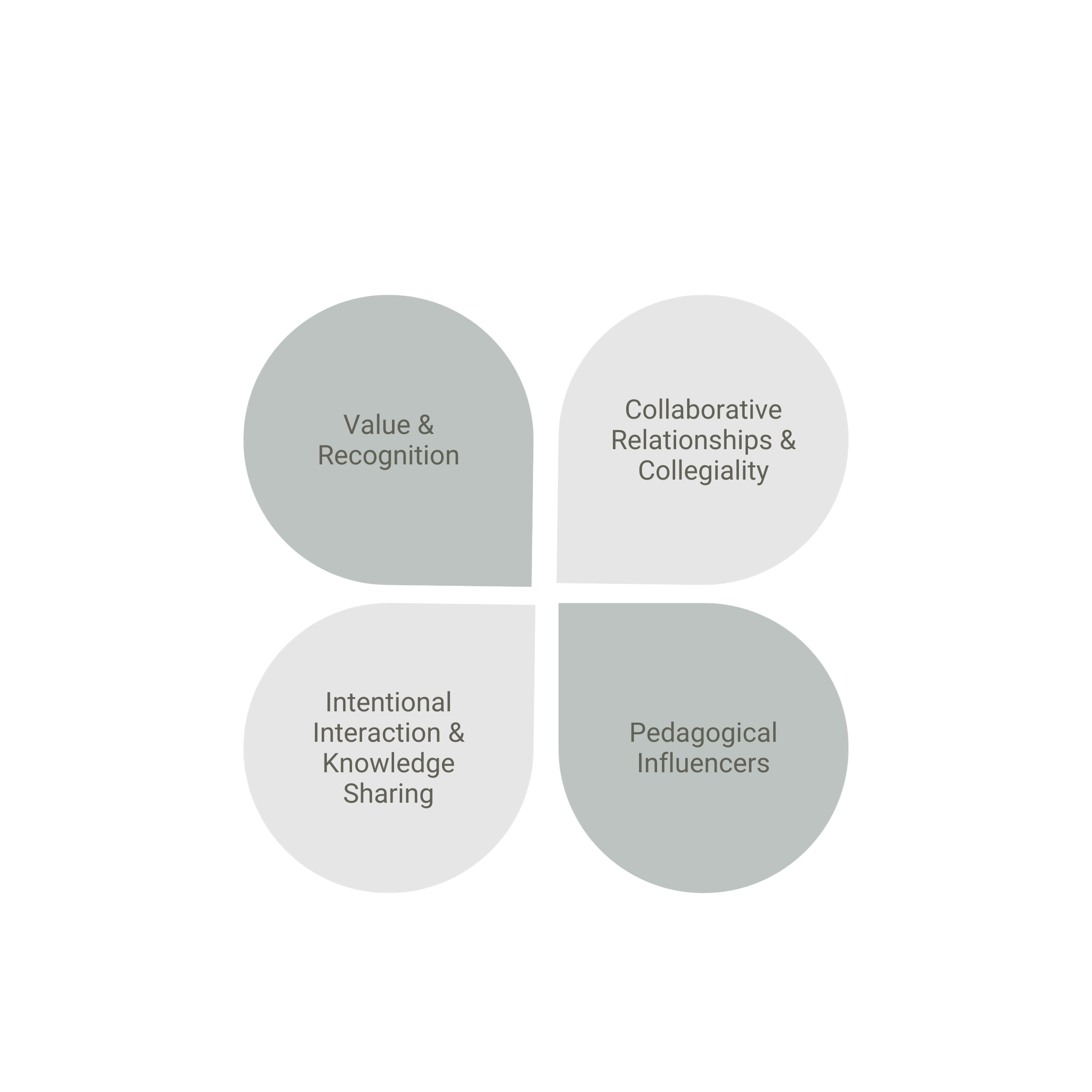
    It reminded me of four key elements critical to building a supportive teaching culture in higher education:

    1. Value and Recognition: teaching and the development of teaching expertise and communities needs to be valued, recognized, and appreciated across multiple organizational levels.  Many formal and informal processes and structures provide value and recognition for teaching including spaces, environments, resources, workload assignments, awards, grants, resources, policy, vision, professional learning, and leadership.
    2. Collaborative Relationships & Collegiality: teaching and the development of teaching expertise should be recognized as a shared responsibility, across the academic community. A collegial “sharing culture” based on respect and trust are fundamental to creating communities of shared responsibility and understanding for teaching in higher education. Fostering this sharing culture extends beyond the responsibilities of teachers themselves.
    3. Intentional Interaction & Knowledge Sharing: opportunities for formal and informal interaction and knowledge sharing about teaching should be fostered, including opportunities for co-teaching, peer support and learning, dialogue, critical reflection, and the sharing of experiences, ideas and knowledge.  The development of teaching and learning communities, networks and conversations must be fostered across all levels of the academic community.
    4. Pedagogical Influencers (aka Pedagogical Change Agents): Pedagogical influencers are individuals who actively support the development of teaching in community and positively influence change. Pedagogical influencers often hold informal roles and inspire concrete actions in their local teaching and learning communities. Pedagogical influencers require support, resources, recognition, and meaningful opportunities to impact change.

    The authors acknowledge the inherent complexities and interrelationship of these different factors in influencing teaching values, attitudes, norms, principles, practices and structures across postsecondary institutions. They suggest, “…the development of a more supportive pedagogical culture requires intentional endeavors to influence abstract and possibly invisible cultural elements in the community” (p. 951).   

    Four elements to building a supportive teaching culture in higher education

    I leave you with some further questions for reflection and dialogue.

    • What are you already doing in each of these areas to intentionally build a supportive teaching and learning culture?
    • What’s missing from this list? What would you add, change, refresh, revise?
    • Where are your strengths and points of pride?
    • What is one area where you would like to further learn, grow, and improve (as an individual, faculty/department, or institution)?
    • What is one action (or forward movement) you would like to take to provide an even more supportive teaching and learning culture in your context?

    Reference:

    Myllykoski-Laine, S., Postareff, L., Murtonen, M., and Vilppu, H. (2023) Building a framework of a supportive pedagogical culture for teaching and pedagogical development in higher education. Higher Education, 85, 937–955. https://doi.org/10.1007/s10734-022-00873-1

  • As we embark on a new academic year, I’ve been thinking a lot about what it means to be an effective educator in higher education. I have to admit that I struggle with the word effective recognizing that teaching and learning are complex and nuanced. Developing teaching expertise is a consistent practice that is supported through engaging in ongoing and intentional reflection over time (Hendry & Dean, 2002; Kreber, 2002). For me, the concept of effectiveness puts a somewhat artificial label of judgment on a practice that shifts, develops and changes over time. What is certain is that growing one’s teaching practice is an iterative journey of practice, reflection, and forward movement.

    A while back, I drafted a set of research-informed principles for teaching in higher education, drawing upon the works of authors such as: Chickering and Gamson’s (1987) seven principles for good practice in undergraduate education, Ramsden’s (2003) thirteen principles for effective university teaching; Weimer’s (2013) five key changes to practice for learner-centred teaching, Lizzio et al.’s (2002) conceptual model for an effective academic environment; and Tigelaar et al.’s (2004) framework for teaching competencies in higher education.  Over the summer, I read Devlin and Samarawickrema’s (2022) thoughtful commentary on teaching in a “post-COVID” higher education. I’ve incorporated some of their work into the below “revised” principles.

    What is presented below is meant to inspire further reflection and dialogue. These are not intended to be a prescriptive or straightforward list of strategies for teaching in higher education. Although the following principles are concisely presented – each is contextual and certainly more complex to put into practice! I imagine these principles as a starting point for curiosity-based discovery.

    Research informed principles for teaching in higher education

    Co-creates a Respectful and Inclusive Learning Environment: works with students and the instructional team to collaboratively create commitments to foster a learning community of respect, care, inclusion, and belonging; shows interest in student’s opinions and concerns; seeks to understand student’s diverse backgrounds, talents, needs, prior knowledge, and approaches to learning; affirms diverse ways of knowing; encourages interaction between instructor(s) and students; exhibits respect for students, colleagues, and the profession, field, and/or discipline.

    Actively Engages Learners: ensures learning materials are current and relevant; explains material clearly, with relevant examples; provides opportunities for students to connect learning to future work, life, and academic experiences; uses a variety of methods and modalities that encourage active and deep approaches to learning, interaction, and engagement; connects meaningfully to community and industry (as appropriate); adapts to evolving learning contexts, technologies, and transformations in society and the field, profession and/or discipline.

    Communicates Clear Expectations: makes clear the intended learning goals/outcomes and standards for performance; provides organization, structure and direction for where the course is going and how this may connect to future learning context (inside and outside of the classroom).

    Encourages Student Independence: provides opportunities for students to develop and draw upon their personal interests; offers choice in learning processes and modes of learning and assessment; provides timely and developmental feedback on learning; encourages self-directed learning, autonomy, and metacognition (aka learning about one’s own approaches to thinking and learning) to promote ongoing self-assessment of learning. 

    Creates and Contributes to a Teaching and Learning Community: uses teaching methods and learning strategies that encourage reciprocity, relationality, mutual learning, as well as thoughtful, respectful and collaborative engagement and dialogue between all members of the course learning community; seeks feedback, input, and works with students as partners in learning; actively adjusts teaching approaches based on student feedback and input; collaborates with and supports teaching colleagues; actively contributes to curriculum conversations and activities across the program.

    Uses Meaningful and Authentic Assessment Methods: clearly aligns assessment methods with intended course outcomes and desired learning goals; designs assessments that are meaningful and relevant to the field, profession, and/or discipline; designs assessment strategies to support students learning and to promote academic integrity; provides clear criteria for evaluation; emphasizes deep learning that can be applied over time; designs learning activities to practice and receive formative feedback on what is assessed; provides opportunities for students to intentionally monitor, evaluate, and adjust their learning progress; iteratively scaffolds assessments and feedback to ensure progressive learning. 

    Commits to Continuous Improvement: gathers feedback on teaching and learning approaches from multiple perspectives (e.g., self, peers, students, scholarship); practices ongoing self-reflection; draws conclusions and takes action from reflection to strengthen teaching; consults and/or engages in the scholarship of teaching and learning; engages in meaningful conversations with colleagues about teaching and learning; identifies clear goals for strengthening teaching and learning practices; adapts, innovates and responds to change and new pedagogical approaches.

    Which of these principles resonate most with you? Which principle most challenges you?

    How do (or might) you put these principles into practice?

    Based on your own context, wisdom of practice or experience, what would you add to or revise in these principles?

    As you reflect on these principles, what is one of your “superpowers” or strengths as an educator?

    What is one thing you may shift in your teaching and learning practices based on these principles?

    How might you use these principles to inspire further conversation or dialogue with a colleague or in your local context (e.g., in a coffee conversation or with your department, faculty, or institutional community)?

    References

    Chickering, Arthur W, & Gamson, Zelda F. (1987). Seven principles for good practice in undergraduate education. AAHE Bulletin, 39(7), 3–7. 

    Devlin, M. & Samarawickrema, G. (2022) A commentary on the criteria of effective teaching in post-COVID higher education, Higher Education Research & Development, 41:1, 21-32, DOI: 10.1080/07294360.2021.2002828

    Hendry,G.D.&Dean,S.J.2002. Accountability, evaluation and teaching expertise in higher education.International Journal of Academic Development,7(1),75-82.

    Kreber,C.(2002).Teaching excellence,teaching expertise, and the scholarship of teaching. Innovative Higher Education,27(1),5-23.

    Lizzio, Alf, Wilson, Keithia, & Simons, Roland. (2002). University Students’ Perceptions of the Learning Environment and Academic Outcomes: Implications for theory and practice. Studies in Higher Education, 27(1), 27-52. 

    Tigelaar, D.E.H, Dolmans, D.H.J.M, Wolfhagen, I.H.A.P, and Van Der Vleuten, C.P.M. (2004) The development and validation of a framework for teaching competencies in higher education. Higher Education, 48, 253-268.

    Ramsden, P. (2003). Learning to Teach in Higher Education. New York: Routledge.

    Weimer, Maryellen. (2013). Learner-centered teaching: Five key changes to practice: John Wiley & Sons.

  • The last three years have presented extraordinarily complex challenges in higher education, as we navigated pivots and experienced ongoing disruptions in our teaching and learning spaces, environments, and communities. We became more aware of the systemic inequities that exist across our organizations. We’ve questioned and leaned into the opportunities and challenges our organizational infrastructure presents (e.g., our technologies, spaces, governance, decision-making, and planning). We’ve also worked to navigate challenges with our individual and collective well-being, anxiety, burnout and exhaustion. Throughout the pandemic, I heard strong leaders described by words such as: systems-level thinkers, networked, self-aware, mindful, equitable, inclusive, empathetic, compassionate, courageous, hopeful, and relational.

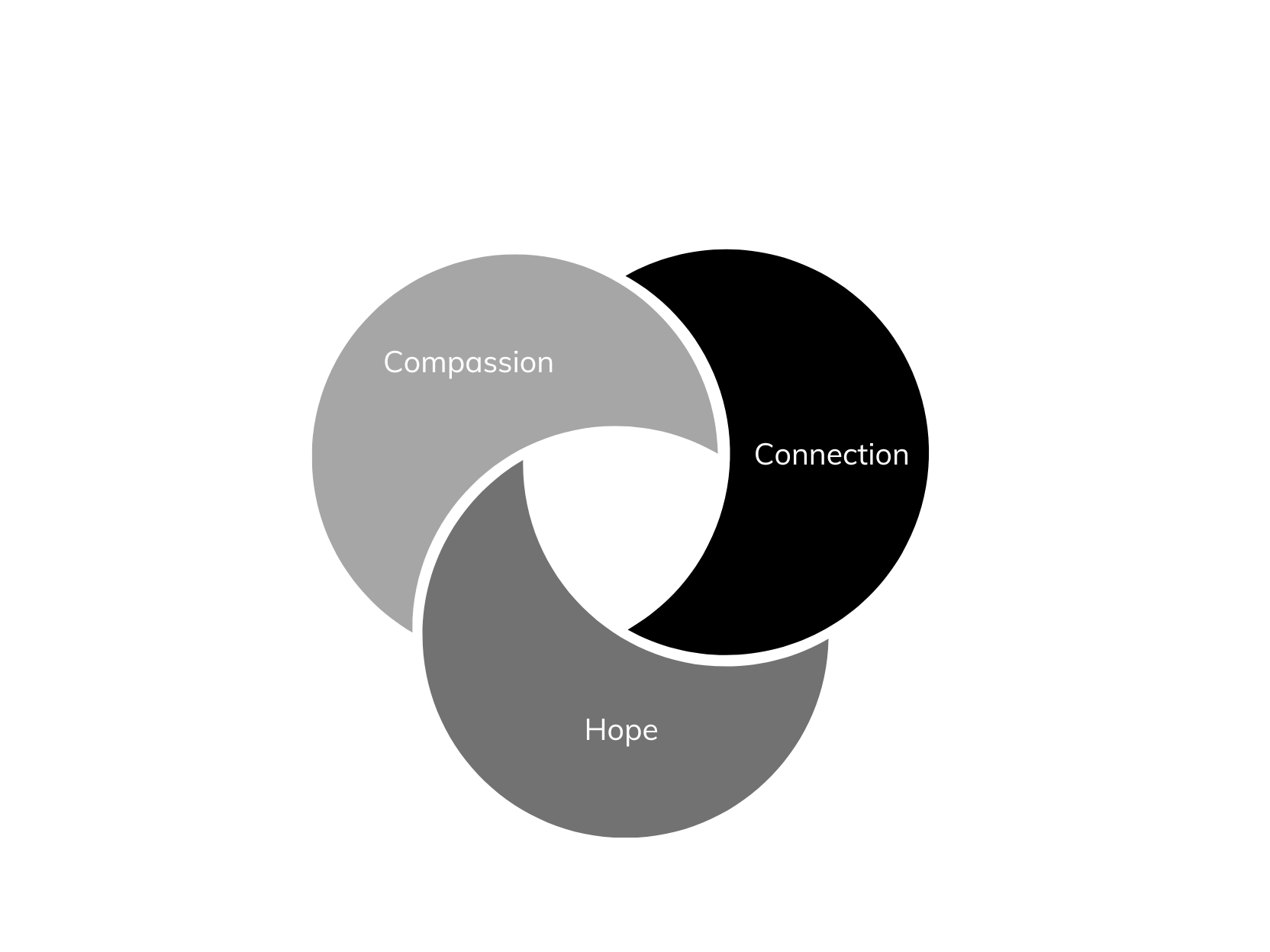
    Perhaps we’ve experienced some foundational shifts in leadership practices, which will continue to carry us forward in higher education? I’ve conceptualized these shifts as three foundational leadership practices: 1) a leadership of compassion; 2) a leadership of connection; and 3) a leadership of hope.

    A leadership of compassion

    Throughout the pandemic we experienced challenges that were difficult to comprehend. We felt the anxiety, isolation, and overwhelming complexities of uncertainty. Building upon Worline and Dutton (2017), Waddington (2021) describes compassion as noticing and making meaning of suffering, feeling empathy for those experiencing suffering, and taking action to alleviate suffering. Throughout the pandemic, leaders across higher education demonstrated compassion by reaching out to their teams, checking in with their colleagues to see how they were doing, demonstrating empathy and vulnerability in the face of ongoing uncertainty, providing reassurance, embracing dialogue, listening deeply to those around them, and demonstrating support through relational action (e.g., Lawton-Misra and Pretorius, 2021). They asked about other’s feelings and well-being, and took action to alleviate barriers and reduce suffering where they could have influence. They suffered themselves. They made mistakes and experienced failure. They learned and unlearned. Their emotions fluctuated, and often, were relentlessly raw and challenging. It became harder to respond, rather than react in the face of ongoing challenge and uncertainty. They demonstrated resilience and vulnerability by sharing their experiences, connecting with peers, normalizing help-seeking, and cultivating a deeper sense of self-awareness, self-compassion, and mindfulness.

    What does a leadership of compassion look like moving forward?

    Hougaard et al. (2021) share practical strategies for demonstrating wise compassion through self-compassion, intention, transparency, and mindfulness. The Conscious Leadership Group’s Above the Line/Below the Line Framework is a fantastic tool for fostering ongoing self-awareness and reflection. Dr. Kristin Neff’s work on developing self-compassion through self-kindness, a recognition of common humanity and mindfulness is transformative.

    A leadership of connection

    There were no simple answers to the challenges we faced during the pandemic. Decision-making was forced by situations beyond our control and the need for action was accelerated at relentlessly unsustainable rates. There were no right answers. The disruptions were constant. The impacts of the pandemic were complex and disproportionately affected equity-deserving groups (Abdrasheva et al., 2022; Bassa, 2022; Jehi et al., 2021). Throughout the pandemic, many leaders embraced the power of shared leadership, relationships, and collaborative decision-making. They brought together informal and formal networks to surface and grapple with challenges, and to share knowledge across once-siloed institutional, faculty, departmental and unit-level boundaries. They identified and connected core networks of problem-solvers, instilled confidence, fostered trust, built relationships, facilitated consensus, listened deeply, and leveraged the strengths of local-level leaders, influencers, and change-catalysts (Bleich and Bowles, 2021; Bassa, 2022; Mehrotra, 2021). They looked across multiple organizational levels to influence systems-level awareness and change. They created peer, cross-institutional, national, and international networks of knowledge and resource sharing, breaking through past barriers of competition and scarcity. They leaned into the realities of the systemic and structural inequities that became increasingly visible across our university structures.

    The work of fostering connection and developing relationships takes time and intentional effort. Research suggests that one of the most important factors associated with student confidence in their learning during the pandemic was their sense of connection with their peers and their professors (Guppy et al., 2022). This finding speaks volumes to the importance of developing and sustaining meaningful relationships bounded by belonging and connection across higher education.

    How can we continue to foster connection moving forward?

    We can continue to bring networks together to grapple with important teaching and learning issues. A few topics that continue to surface: student assessment, academic integrity, artificial intelligence, experiential and work-integrated learning, learning spaces and technologies, equity, diversity, inclusion, and accessibility, truth, reconciliation and Indigenous engagement, the scholarship of teaching and learning (SoTL), mental health and well-being, student learning skills, engagement and metacognition, sustainability and climate change, blended and online learning, learning pathways, stackable and personalized learning, and micro-credentialing. We can listen deeply to one another – with an intention to understand and heal, rather than to respond, judge, debate, criticize, or problem solve. We can trust and provide resources and support to pedagogical catalysts, influencers and local educational leaders who care deeply about teaching and make an effort to develop local teaching and learning networks and communities (Myllykoski-Laine et al., 2022). We can create accessible spaces, events, and initiatives for open knowledge sharing about teaching and learning, within our academic units, institutions, nationally and globally. A fantastic exemplar is Dr. Maha Bali’s and colleagues’ work on Equity Unbound – an open, and freely available resource that is filled with strategies to inspire online community-building, through the principles of equity and care.

    A leadership of hope

    It was easy to feel overwhelmed and consumed during the pandemic. The challenges we faced felt enormous, and it was often difficult to see where and how we could have influence. We learned the importance of establishing a leadership of hope. It was a hope that acknowledged that what we were living through was challenging and hard. We were experiencing a world that had become increasingly uncertain, volatile, and unpredictable.

    Despite the challenges and inequities which surround us, critical hope requires us to come together in community to connect in meaningful ways, to envision a better and more inclusive future, and to take incremental action to create positive change (Riddell, 2020). Critical hope is a “…hope that is neither naïve nor idealistic;” it is both critical and emotional, and it works to dismantle injustice and despair in our systems and structures (Grain & Lund, 2016, p.51). It accepts that through connection and collective action, we can help to reduce suffering and move towards healing.

    During the pandemic, leaders sustained a sense of critical hope by naming and leaning into the systemic inequities that continued to emerge, by acknowledging the ongoing uncertainty and suffering that occurred, by creating a sense of purpose and meaning in the face of uncertainty, by demonstrating a continuous perseverance to take action, by maintaining honest communication, by accepting and moving beyond mistakes, by establishing open feedback channels, and by creating an organizational culture of continuous learning and growth (Beilstein et al., 2021; Bassa, 2022). Leaning into uncertainty, systemic inequities, failure and ongoing learning took courage. It was an intensely vulnerable time for leaders – many of whom drew focussed attention to the power of emotion and humanity to help us through it all.

    How do we continue to move forward through a leadership of hope?

    McGowan and Felten (2021) highlight that deep inequities persist in higher education. They present a wonderful equation for continued reflection that I believe provides a foundation for leading through hope (p. 474):

    Agency

     ‘I can change in meaningful ways despite the systems and structures constraining me’

    +

    Pathways

     ‘I see specific and purposeful steps I can take’

     =

    Hope

    When feeling overwhelmed, this framework provides me pause to stop and ask:

    1) What is one meaningful change that I can contribute to despite the systems and structures that constrain me?

    2) What are some specific and purposeful steps I can take to move towards that change?

    3) Who/what are the support networks I can draw upon for support and accountability?

    There is always something I can do to help move towards the positive changes we most aspire to in higher education.

    I am curious how these three shifts in leadership (i.e., a leadership of compassion; a leadership of connection; a leadership of hope) resonate with you? What would you change or add? What shifts have you observed? What can we learn moving forward?

    References

    Abdrasheva, D. Escribens, M., Sazalieva, E., do Nascimento, D. V., & Yerovi, C. (2022). Resuming or reforming? Tracking the global impact of the COVID-19 pandemic on higher education after two years of disruption. UNESCO. https://www.iesalc.unesco.org/wp-content/uploads/2022/05/IESALC_COVID-19_Report_ENG.pdf  

    Beilstein et al. (2021) Leadership in a time of crisis: Lessons learned from a pandemic. Best Practice & Research Clinical Anaesthesiology 35 (2021) 405e414

    Bassa, B. (2022). Leading Into a New Higher Education as It Emerges in the Present Moment. In International Perspectives on Leadership in Higher Education (Vol. 15, pp. 271-290). Emerald Publishing Limited.

    Bleich, M. R., & Bowles, J. (2021). A model for holistic leadership in post-pandemic recovery. Nurse Leader, 19(5), 479-482.

    Guppy, N., Matzat, U., Agapito, J., Archibald, A., De Jaeger, A., Heap, T., … & Bartolic, S. (2023). Student confidence in learning during the COVID-19 pandemic: what helped and what hindered?. Higher Education Research & Development42(4), 845-859.

    Grain, K. M., & Lund, D. E. (2017). The social justice turn: Cultivating’critical hope’in an age of despair. Michigan Journal of Community Service Learning23(1).

    Jehi, T., Khan, R., Dos Santos, H., & Majzoub, N. (2022). Effect of COVID-19 outbreak on anxiety among students of higher education; A review of literature. Current Psychology, 1-15.

    Lawton-Misra, N., & Pretorius, T. (2021). Leading with heart: academic leadership during the COVID-19 crisis. South African Journal of Psychology51(2), 205-214.

    McGowan, S., & Felten, P. (2021). On the necessity of hope in academic development. International Journal for Academic Development26(4), 473-476.

    Mehrotra, G. R. (2021). Centering a pedagogy of care in the pandemic. Qualitative Social Work20(1-2), 537-543.

    Myllykoski-Laine, S., Postareff, L., Murtonen, M., & Vilppu, H. (2022). Building a framework of a supportive pedagogical culture for teaching and pedagogical development in higher education. Higher Education, 1-19.

    Riddell, J. (2020) Combatting toxic positivity with critical hope. University Affairs. https://www.universityaffairs.ca/opinion/adventures-in-academe/combatting-toxic-positivity-with-critical-hope/

    Worline, M. C. & Dutton, J. E. (2017). Awakening compassion at work: The quiet power that elevates people and organizations. Oakland, CA: Berrett-Koehler

    Waddington, K. (2021). Introduction: Why compassion? why now?. In Towards the Compassionate University (pp. 5-22). Routledge.

  • Recently, we’ve heard that students and course instructors are reporting feeling overwhelmed. Assessment is often at the centre of these conversations. Jones et al. (2021) acknowledge that assessment practices impact both educator’s and student’s perceptions of their wellbeing. They highlight some common tensions related to challenge, format, weighting, flexibility, and group work. I anticipate more research to surface on assessment practices for wellbeing in higher education, as we continue to learn and heal from our experiences during the global pandemic.

    Over the past year, I’ve noticed a handful of strategies that continue to surface as potential ways to promote wellbeing in student assessment. Many of these strategies align with and build upon research from Ross (2021) on assessment practices using a lens of ethics-of-care. I’ve summarized five approaches to promote wellbeing in student assessment below:

    1. Wherever possible, focus on implementing practices that align with principles for Universal Design for Learning into student assessment practices (CAST, n.d.). UDL principles support multiple means of engagement, multiple means of action and expression, and multiple means of representation (Coffman & Draper; 2022; La et al., 2018). Strategies may include intentionally connecting assessments with student interests, supporting self-assessment/reflection, and providing flexibility, choice and a variety of forms of assessment throughout the semester (CAST, n.d.; La et al., 2018).
    2. Provide some flexibility to adjust submission timelines throughout the semester. One example is to provide late banks where students have a set amount of time (e.g., 48-72 hours) to use and distribute without penalty when they are struggling to meet assignment deadlines throughout the semester (Schroeder et al., 2019).
    3. Let students bring a page of self-generated notes or a flashcard into an exam. This strategy may help reduce stress and anxiety, and promote metacognition as students strategically consider what they already know and where their growing edges are in terms of the course material (Settlage & Wollscheid, 2019).
    4. Wherever possible, streamline and make transparent grading processes. For example, work with students as partners to co-develop the assignment grading criteria (Meer and Chapman, 2014), and have them submit a self-assessment of their work based on these criteria (Yan & Carless, 2022). What are they most proud of? What came most easily to them in completing this assignment? Where did they struggle most? What would they most like to improve upon? What 1-2 areas do they most want to receive feedback on? Use this self-assessment to help streamline where and how you provide feedback when grading.
    5. For in-class presentations, have students present to small groups, rather than to the entire class. Many students experience fear when presenting publicly – practice, preparation and support can help to alleviate some of this fear (Grieve et al., 2021). Providing opportunities for students to practice and present their work to small groups of peers may help reduce anxiety, streamline the use of class time, and foster peer learning and development. For these presentations, consider focussing the grading process on student’s reflections of the growth and development of their presentation skills, and on communication skills such as active listening, and providing/responding to peer feedback. You may even consider doing this multiple times throughout the semester so that students have more than one opportunity to practice their presentation, communication, and feedback skills.

    By no means is this an exhaustive list. There are many creative ways to implement assessment practices that further foster wellbeing for students and educators. I’d love to hear your ideas, as I predict this will be a growing topic of discussion in higher education over the coming years.

    References

    CAST (n.d.) UDL ON CAMPUS · Universal Design for Learning in Higher Education: UDL and Assessment. http://udloncampus.cast.org/page/assessment_udl

    Coffman, S., & Draper, C. (2022). Universal design for learning in higher education: A concept analysis. Teaching and Learning in Nursing17(1), 36-41.

    Daniel M. Settlage & Jim R. Wollscheid (2019). An analysis of the effect of student prepared notecards on exam performance. College Teaching, 67:1, 15-22, DOI: 10.1080/87567555.2018.1514485

    Grieve, R., Woodley, J., Hunt, S. E., & McKay, A. (2021). Student fears of oral presentations and public speaking in higher education: a qualitative survey. Journal of Further and Higher Education45(9), 1281-1293.

    Jones, E., Priestley, M., Brewster, L., Wilbraham, S. J., Hughes, G., & Spanner, L. (2021). Student wellbeing and assessment in higher education: the balancing act. Assessment & Evaluation in Higher Education46(3), 438-450.

    La, H., Dyjur, P., & Bair, H. (2018). Universal design for learning in higher education. Taylor Institute for Teaching and Learning. Calgary: University of Calgary. https://taylorinstitute.ucalgary.ca/resources/universal-design-learning-higher-education

    Meer, N., & Chapman, A. (2015). Co-creation of marking criteria: students as partners in the assessment process. Business and management education in HE, 1-15. https://www.tandfonline.com/doi/pdf/10.11120/bmhe.2014.00008

    Settlage, D. M., & Wollscheid, J. R. (2019). An analysis of the effect of student prepared notecards on exam performance. College Teaching67(1), 15-22. https://doi.org/10.1080/87567555.2018.1514485

    Schroeder, M., Makarenko, E., & Warren, K. (2019). Introducing a late bank in online graduate courses: the response of students. The Canadian Journal for the Scholarship of Teaching and Learning10(2). https://doi.org/10.5206/cjsotl-rcacea.2019.2.8200

    Ross, R. (2021) Reflecting on Well-Being and Assessment Practices Using an Ethics-of-Care Lens. Summer Wellness Series Workshop, University of Calgary. https://taylorinstitute.ucalgary.ca/series/summer-wellness

    Yan Z. & Carless, D. (2022) Self-assessment is about more than self: the enabling role of feedback literacy. Assessment & Evaluation in Higher Education, 47(7), 1116-1128, DOI: 10.1080/02602938.2021.2001431

  • As institutions rapidly transformed the delivery of student learning, the pandemic drew attention to the importance of student assessment in higher education.  Postsecondary institutions continue to grapple with the opportunities and challenges that assessment practices present across multiple organizational levels, whether in individual courses, across academic programs, or as it relates to institutional structures, policies, and processes.

    Gibbs (2006) affirmed that assessment is key to student learning, often driving what, when and how students learn. Boud (2000) challenged us to rethink all components of assessment to create more sustainable and meaningful assessment practices to support student learning. More recently, authors such as Jones et al. (2021) have highlighted that wellbeing must be a key consideration for assessment practices in higher education. Technological developments such as artificial intelligence (AI) have become more prevalent in supporting practices related to assessment design and delivery, e-proctoring, grading and feedback, and learning analytics – while also presenting numerous ethical dilemmas and risks (Zawacki-Richter, et al., 2019; Eaton and Turner, 2020). Attention has also been focussed on how assessment practices can further support (or hinder) equity, diversity, inclusion, accessibility, and social justice in higher education (Tai et al., 2023).

    There is no doubt that student assessment in higher education is complex and important.  When addressing complexity, I tend towards using principles as a guide. Building upon the excellent work of Boud (2000), Gibbs and Simpson (2005), Gibbs (2006), Jones et al. (2021), Lindstrom et al. (2017) and recent work done at McGill University (2022), I’ve curated the following principles as a starting point for conversation and decision-making related to student assessment in higher education:

    1. Meaningful assessment practices shift the focus of assessment from evaluating, ranking, or judging student performance to ensuring assessment is an integral and intentional component of student learning experiences.
    2. Assessment practices should foster on-going learning and growth. Assessment tasks should be structured and scaffolded progressively, to ensure the development of expertise and confidence overtime, with appropriate challenge, feedback, and practice. Assessment should recognize and validate multiple disciplinary, scholarly, and culturally-relevant approaches and ways of knowing.
    3. Assessment practices should be equitable, fair, accessible, and inclusive. A variety of assessment methods should be utilized and provide some level of flexibility and choice to maximize student engagement, foster accessibility, and encourage student involvement in the assessment process. Assessment practices should draw upon the principles and practices of universal design for learning.  Grading practices should be based on transparent standards and criteria, rather than norms, ranks, or distributions.
    4. Assessment practices should be developmental and provide opportunities for feedback, self-regulated learning, and metacognition. There should be a balance between summative and formative assessment processes, with multiple opportunities for students to reflect on, receive, respond to, and use feedback on their learning.  Feedback opportunities should be encouraged from multiple perspectives (e.g., self-reflection, peers, course instructors, and/or teaching assistants).
    5. Assessment practices should foster academic integrity. Assessment design should uphold the values of integrity and be relevant to learning goals. Expectations related to assessments, and the policies and procedures related to academic integrity should be clearly communicated.
    6. Assessment should be recognized as a core element in the planning and design of course and program learning experiences. Assessment practices should be transparent, providing students with clear expectations on their assessments, and how they align with the teaching and learning goals, and approaches for the course/program/discipline. Institutional and unit-level supports should be available to ensure course instructors and teaching assistants have opportunities to develop expertise in developing and supporting scholarly, relevant, and meaningful assessment practices.
    7. Assessment practices should be sustainable and align with a commitment to supporting well-being for students, faculty, and staff. Expectations related to assessment practices should be transparent and clearly communicated to students. The design and scheduling of assessment tasks should consider a reasonable time to complete the assessment, be appropriate to the credit-weighting, recognize the cumulative distribution of assessment tasks throughout the semester, and support sustainable workloads for students, course instructors and teaching assistants.

    What’s missing from these principles ?  What would you change or add? How could you imagine using and building upon these principles within your own local context?

    References

    Boud, D. (2000). Sustainable assessment: rethinking assessment for the learning society. Studies in Continuing Education, 22, 2, 151-167

    Eaton, S. E., & Turner, K. L. (2020). Exploring academic integrity and mental health during COVID-19: Rapid review. Journal of Contemporary Education Theory & Research (JCETR)4(2), 35-41.

    Gibbs, G., & Simpson, C. (2005). Conditions under which assessment supports students’ learning. Learning and teaching in higher education, (1), 3-31.

    Gibbs, G. (2006). How assessment frames student learning. In Innovative assessment in higher education (pp. 43-56). Routledge.

    Jones, E., Priestley, M., Brewster, L., Wilbraham, S. J., Hughes, G., & Spanner, L. (2021). Student wellbeing and assessment in higher education: the balancing act. Assessment & Evaluation in Higher Education46(3), 438-450.

    Lindstrom, G., Taylor, L., Weleschuk, A. (2017) Guiding Principles for Assessment of Student Learning. Taylor Institute for Teaching and Learning Guide Series. Calgary, AB: Taylor Institute for Teaching and Learning at the University of Calgary, June 2017. https://taylorinstitute.ucalgary.ca/sites/default/files/Guiding_Principles_for_Assessment_of_Student_Learning_FINAL.pdf

    McGill University (Office of the Provost and Vice-Principal Academic)  (2022) Policy on Assessment of Student Learning (pp. 3-11) in 512th REPORT OF THE ACADEMIC POLICY COMMITTEE TO SENATE on the APC meetings held on April 14th and May 2nd, 2022 McGill University. https://www.mcgill.ca/senate/files/senate/03_d21-58_512th_apc_report_0.pdf

    Tai, J., Ajjawi, R., Boud, D., Jorre de St. Jorre, T. (2023) Promoting equity and social justice through assessment for inclusion. In pp 9-18. Ajjawi et al. (Eds). Assessment for Inclusion in Higher Eduation: Promoting Equity and Social Justice in Assessment. Routledge, Taylor & Francis Group. https://www.taylorfrancis.com/books/oa-edit/10.4324/9781003293101/assessment-inclusion-higher-education-rola-ajjawi-joanna-tai-david-boud-trina-jorre-de-st-jorre

    Zawacki-Richter, O., Marín, V. I., Bond, M., & Gouverneur, F. (2019). Systematic review of research on artificial intelligence applications in higher education–where are the educators?. International Journal of Educational Technology in Higher Education16(1), 1-27.

  • By: Natasha Kenny (Senior Director, Taylor Institute for Teaching and Learning)

    and

    Patti Dyjur (Educational Development Consultant, Taylor Institute for Teaching and Learning)

    It’s been a tough couple of years for students and educators (Brazeau et al., 2020; Morgan and Simmons, 2021).  Over the past few weeks, we’ve increasingly heard from our academic community that students and educators are struggling.  There is an acknowledgement that we have not taken the time to intentionally reflect upon and heal from what we have experienced from the global pandemic.  Our individual and collective wellbeing has and continues to suffer and students are experiencing a “skills gap” in their approaches to time management, organization, independence and commitment, and communication (Napierala et al., 2022). Without a doubt, we need more conversation and shared leadership to address our experiences moving forward (Abdrasheva et al., 2022; Garcia-Morales et al., 2021).

    We’ve been thinking a lot about how to address some of the challenges students and educators are currently facing in their courses.  Acknowledging that this work is complex and will have to be addressed across multiple organizational levels, we were drawn back to some of our earlier work on how the PERMA flourishing framework (Seligman, 2012) might be used to help? For example, Morgan and Simmons (2021) have used this framework to develop a wellbeing program in universities in the UK.

    In a previous post we shared how the PERMA framework could be used to support student and educator wellbeing in the classroom. We share an adaptation of that post here:

    Seligman’s (2012) PERMA model: Positive Emotions, Engagement, Relationships, Meaning, Accomplishment

    Positive Emotions: feeling joy, hope and contentment; reducing stressors; promoting positive coping and resilience

    For instructors: schedule daily, weekly and monthly time to replenish and recharge; get up from the keyboard and take a microbreak; implement gratitude practices; ask for help from a trusted colleague or ask if you can help them; practice self-compassion; keep a ‘happy day’ email folder to store and revisit thank you messages and notes of appreciation from colleagues and students. 

    For students: Implement incremental learning tasks; create low-stakes assignmentsincorporate student voice in and flexibility in setting deadlines (we love the concept of late banks); incorporate class time to check-in with students; incorporate mindfulness/contemplative pedagogies; promote a positive learning environment for all by establishing community and presence and cultivating equity, diversity and inclusion; connect with students through strategies such as learning their names and checking in with them to see how things are going.

    Engagement: feeling attached, involved and an ability to concentrate on activities; creating meaningful opportunities to draw upon strengths and interests

    For instructors: talk to your colleagues/department head about your strengths and interests; bring your strengths and interests into the classroom; engage in your workspace where students and colleagues can see and connect with you (e.g., studio, office, lab); leverage zoom or other virtual spaces to connect one-one with students, colleagues, and small groups; rest, recharge and detach from work during vacation time (we know this one is tough!). 

    For studentsprovide choice in course activities and assignments; help students identify their strengths and interests through self-assessment activities and classroom discussion; encourage learning activities that relate to and encourage students to share their interests (e.g., discovering and sharing relevant readings and resources); bring relevant connections and “real-world” examples into the course to help students make meaning; incorporate collaborative activities in online courses such as jigsaws or world cafes; include online discussions to promote engagement; incorporate principles of Universal Design for Learning; incorporate variety in teaching and learning activities.

    Relationships: feeling connected, supported, and cared about; promoting opportunities for collaboration and interaction within and amongst teams  

    For instructors: connect with a community of practice or learning community related to something that interests you; invite people for coffee; recognize your colleagues (e.g., write a letter of support or send a brief email of acknowledgement); ask for feedback from a trusted colleague; seek and/or offer peer mentorship; invite students to lead class discussions; intentionally connect with a colleague or community off-campus for fresh ideas and connections.

    For studentsFacilitate peer and active learning, problem-solving and discussion activities; encourage students to get up and move – change seats and connect with a “new neighbour”; encourage learners to talk to elbow partners (students next to them); encourage study groups and/or collaborative note-taking; set up informal study groups; foster an inclusive learning environment; build in supports to facilitate positive team dynamics if assigning group work.

    Meaning: feeling valued and connected to something greater than self; connecting to purpose; promoting reflection

    For instructors: seek opportunities to mentor and provide positive feedback to colleagues; participate in a teaching square/triangle; prepare and/or revise a philosophy statement that speaks to your core values and purpose as a teacher – share this with students and/or a colleague; reflect on your teaching goals and impact (where are you making a difference? where would you like to further make a difference?)

    For students: Model reflection (sharing what you learned from your mistakes); promote co-op programs and experiential learning opportunities; provide context around how student learning in the course is connected to students’ academic, personal and professional development; have students set their own goals for learning; collect and respond to mid-semester student feedback  – stop, start, continue; encourage metacognitive activities (e.g. exam wrappers); relate course concepts and topics to current events; have students create their own materials such as graphic organizers/ notes, concept maps, and summary notes. 

    Accomplishment: progressing towards goals; feeling capable and a sense of accomplishment; providing autonomy; celebrate success

    For instructors: Keep notes of your successes (e.g. after class, at end of the week); celebrate small wins and achievements along the way (e.g. have coffee with a colleague; keep a stack of sticky notes to document what’s working on the corner of your desk; acknowledge that accomplishments come in many shapes and forms; share goals with a mentor/supportive colleague; connect with colleagues you trust to help each other with accountability and perspective; provide space to share key teaching successes and learnings at department meetings.

    For students: Share positive and balanced feedback; encourage students to recognize their successes in a final course reflection; allow students to select from a series of questions to respond to in their assignments; design open-ended projects to give students choice in a topic that interests them; allow students to demonstrate their learning and reflect on it with online portfolios.  


    We continue to wonder:

    How could these approaches and this framework be used to further support educator and student wellbeing as we continue to learn and heal from our teaching and learning experiences during the pandemic?

    Overall, how might we design courses to promote a sense of wellness, for both students and instructors? 

    How might we more broadly foster well being through our assessment practices across higher education?

    References:

    Abdrasheva, D., Escribens, M., Sabzalieva, E., Vieira do Nascimento, D., & Yerovi, C. (2022). Resuming or reforming? Tracking the global impact of the COVID-19 pandemic on higher education after two years of disruption. Instituto Internacional de la UNESCO para la Educación Superior en América Latina y el Caribe. https://unesdoc.unesco.org/ark:/48223/pf0000381749

    Brazeau, G. A., Frenzel, J. E., & Prescott, W. A. (2020). Facilitating wellbeing in a turbulent time. American journal of pharmaceutical education, 84(6). https://www.ajpe.org/content/84/6/ajpe8154.short

    García-Morales, V. J., Garrido-Moreno, A., & Martín-Rojas, R. (2021). The transformation of higher education after the COVID disruption: Emerging challenges in an online learning scenario. Frontiers in Psychology, 12, 616059. https://www.frontiersin.org/articles/10.3389/fpsyg.2021.616059/full

    Morgan, B., & Simmons, L. (2021, May). A ‘PERMA’response to the pandemic: an online positive education programme to promote wellbeing in university students. In Frontiers in Education (Vol. 6, p. 642632). Frontiers Media SA. https://www.frontiersin.org/articles/10.3389/feduc.2021.642632/full

    Napierala, J., Pilla, N., Pichette, J., & Colyar, J. (2022) Ontario Learning During the COVID-19 Pandemic: Experiences of Ontario First-year Postsecondary Students in 2020–21. Toronto: Higher Education Quality Council of Ontario. https://heqco.ca/pub/ontario-learning-during-the-covid-19-pandemic-experiences-of-ontario-first-year-postsecondary-students-in-2020-21/

    Seligman, M. (2012). Flourish: A visionary new understanding of happiness and well-being. Atria books.

  • Image Credit: Taylor Institute for Teaching and Learning, University of Calgary
    Source: https://taylorinstitute.ucalgary.ca/about/the-building

    By Natasha Kenny and Gavan Watson

    Post 2 of 2

    In our first post, we explored what active learning classrooms were, concluding that they are fundamental to supporting student-centred approaches to learning, provide a visible artifact of an institution’s philosophy of learning, and must be seen as a critical component of our teaching and learning community.  So how do we move forward with supporting the intentional planning, design and use of active learning spaces in the context of our academic communities?  How might our experiences during the global pandemic further influence how we incorporate these spaces into our academic communities? 

    Expanding upon the principles proposed by Finkelstein et al. (2016) and Finkelstein and Winer (2020), research related to the impact and influence of active learning classroom, and our own lived experience, we propose five approaches for guide guiding the planning, design, and use of learning spaces in postsecondary education: 1) Collaboration 2) Community 3) Flexibility 4) Transparency 5) Access.

    1. Collaboration

    One of the most often cited impacts of active learning classrooms spaces is that they fundamentally shift the social context in which teaching and learning occurs (Baepler and Walker, 2014). ALCs can create a sense of psychological and emotional intimacy, where learners and instructors are further encouraged to actively contribute, ask questions, share opinions and collaborate with each other to co-create knowledge in a learning community (Holec and Marynowski, 2020; Baepler and Walker, 2014; Kariippanon et al., 2018). Features of these spaces that best support collaboration and engagement, and foster the development of relationships include features such as: 

    • flat floors to support movement and collaboration and reduce power dynamics in order to create a shared space of learning between students and instructors; 
    • the inclusion of multiple whiteboards and writable surfaces; 
    • tables for group seating or, in larger spaces tiered seating on wheels which allows for collaboration and small group activities between rows; and, 
    • multiple screens to ensure sight lines are maintained around the room (Kenny and Chick, 2016; Finkelstein and Winer, 2020), and (if applicable) for remote learners to see and be seen by all participants in the learning community.

    In technology-enhanced spaces, this may also include hardware and software capabilities to create and share knowledge within and amongst a broader community of instructors and learners (Baepler, Walker and Driessen, 2014).  These technology enhanced capabilities have become even more important as we strive to increase access to students and instructors who may be required to engage remotely in course teaching and learning activities (either temporarily or for a sustained period of time). ALCs  help strengthen relationships between all members of the classroom learning community (Kenny and Chick, 2016). They can be seen as providing critical opportunities for instructors to engage themselves in meaning-making and sustained reflection on their positionality (and power) in learning processes (Ignelzi, 2000; Savin-Baden, McFarland, and Savin-Baden, 2008) where – in ALCs – instructors are seen as collaborators and co-creators in the learning process, rather than passive knowledge transmitters.

    2. Community 

    Building upon Shulman’s (1993) call to see teaching as community property, this principle speaks to the importance of ensuring that the processes we use to govern, inform and communicate the planning, design, use, and impact of ALCs engage diverse members of the academic community. Community engagement is critical to establishing a shared sense of belonging, helping the academic community and individuals within that community fulfill its needs/goals, and to creating a sense of connection based on shared history and experiences (McMillan and Chavis, 1986). Fundamentally, these community processes must include collaborative conversations, decisions, work and research from all groups connected to active learning classrooms including: students, instructors, teaching assistants, architects, space planners, facilities management and maintenance staff, educational developers, learning and information technology specialists, the Registrar’s Office, student services staff, external community members and stakeholders, and senior administrators. A community-based approach to the planning, design and use of ALCs is also advocated by Jamieson (2003) who states that educational developers and teaching and learning centres can play a key role in facilitating dialogue across multiple groups in order to ensure that educational visions and goals inform the design of learning spaces. These conversations can also help to strengthen teaching and learning cultures as individuals from across academic and non-academic units come together to engage in meaningful conversations and strategic decision-making about teaching and learning (Roxå, Mårtensson & Alveteg, 2011; Finkelstein et al., 2016).

    A community-based approach to pedagogical support for instructors that use active learning classrooms is also seen as critical to their success, as instructors need support in shifting their approaches to teaching and learning in these spaces (Hyun, Ediger and Lee, 2017). This support often includes intentionally designed and facilitated professional learning programs for instructors teaching in these spaces, in the form of consultations, workshops and/or communities of practice (Finkelstein and Winer, 2020). It may also include bringing together and connecting instructors who teach in these spaces, so that they can engage in informal, but significant conversations about their learnings within and across disciplines (Roxå & Mårtensson, 2009).  Finally, it should also include developing working groups with representation from across the academic community to inform policy development and processes for the continued planning, design and use of active learning classrooms.

    3. Flexibility

    Flexibility can be seen as the ability of ALCs to adapt to the ongoing needs of the academic community across five areas: fluidity, versatility, convertibility, scalability and modifiability (Monahan, 2002). Flexibility may include ensuring that furniture within the active learning classroom is usable and mobile, most often including mobile and height-adjustable podiums, and large work surfaces (i.e., tables) to accommodate multiple teaching and learning devices and group work of various sizes, as well as tables and chairs with wheels in order to accommodate various classroom configurations for learning across disciplines (e.g., small group work, individual seating during assessments, learning in a circle). ALCs designed with fixed furniture, often intended to support the installation of conduit to hard-wire technology and power-drops are now limited in terms of their versatility, convertibility and modifiability (Monahan, 2002). Wireless technology and screen sharing/projection has allowed for learners and instructors to share and co-create information using almost any wireless device and application. This has become more important now more than ever, as the global pandemic has encouraged us to consider how we can create spaces of shared learning and creation for in-class and remote learners and educators. From an institutional-perspective, flexibility can also be seen as critically important in terms of the versatility, convertibility, scalability and modifiability of ALCs. For example, ALCs may be designed with retractable walls and seating to convert to various sizes and uses. Simple is often best when it comes to thinking about flexibility in ALCs.

    “The most useful flexible (and cost-effective) technologies in active learning classrooms continue to be movable tables and chairs, and shared whiteboards/writable surfaces that are close at hand (Baepler, Walker and Driessen, 2014; Finkelstein and Winer, 2020). “

    4. Transparency

    Transparency as a principle asks us to make teaching and learning processes more explicit and visible across our academic communities, and to put an end to the isolation and solitude many instructors feel when approaching their teaching practice (Winkelmes, 2019; Shulman 1993). This principle advocates for a more explicit, collaborative and open approach to the planning, design and use of active learning classrooms. From a physical design perspective this could mean incorporating glass walls in active learning classrooms to ensure the teaching and learning activities within are made visible to members of the academic community across disciplines. From a planning perspective, the principle of transparency involves making strategic conversations and decision-making processes related to planning, design, use and allocation of active learning classrooms more visible. For example, Finkelstien et al. (2016) reflect on the importance of including principles for the design of learning spaces in institutional strategic documentation, and how that has more broadly communicated the institution’s educational goals as it relates to the design and redesign of learning spaces. This could also mean managing the booking of  active learning spaces centrally to ensure that instructors and students across all academic disciplines have access to these spaces. This principle is also intricately linked to the principle of community as we more intentionally make the teaching and learning practices we use in active learning classrooms more visible, and promote knowledge sharing across disciplines. As previously mentioned, this may include bringing instructors that use active learning classrooms together to formally and informally engage in professional learning related to their use of these spaces, and ensuring these instructors are appropriately rewarded and recognized for their commitment to supporting student learning. This may also include engaging in systematic research, scholarship and dissemination related to the impact and influence of active learning spaces in postsecondary education so that we are learning from and sharing with each other across various academic contexts and networks.

    5. Access

    This last principle represents a call to consider how and who is accessing (or not accessing) the planning, design and use of active learning spaces and why? Higher education continues to be dominated by Western epistemologies and processes which contribute to exclusion and marginalization (Louie et al., 2017; Tamik and Guenter, 2019), and our teaching and learning spaces are no exception.  This principle asks us to ensure our active learning classrooms demonstrate, recognize and value difference, and support the ability to participate equitably (Tamtik and Guenter, 2019) in their planning, design and use. It also asks us to consider how we are aligning the planning, design and use of our active learning spaces with other institutional priorities and commitments such as Indigenous Engagement, Sustainability, Internationalization, Equity, Diversity and Inclusion, and Mental Health and Well-Being. For example, how are equity-deserving groups represented in the planning, design, strategic decision-making and governance related to active learning classrooms?  How do we support access and engagement of learners who do not have access to technology, such as laptops? What physical, procedural, and institutional barriers must be removed to ensure that all instructors and students, from across disciplines have access to teach and learn in these spaces? How can these spaces be designed to validate Indigenous perspectives, methodologies, epistemologies, protocols, approaches and pedagogies (Louie et al, 2017)? How can these spaces further reflect and communicate our commitments to truth, reconciliation, decolonization and transformation? Conversations related to access have become more prevalent as interest in technology-enabled ALCs has expanded over the course of the global pandemic, with more educators seeking flexibility in the way they engage learners in their courses. Our thoughts related to this principle are emerging. We acknowledge openly that more needs to be done to expand upon, contribute to and meaningfully explore this principle. 

    Summary

    We recognize that it is not realistic for all spaces to be designed as an intensive, technology-enabled active learning classroom. Like Finkelstein and Winer (2020), we advocate for conceptualizing a continuum of formal learning spaces from intensively designed, technology-enabled active learning classrooms, through to flexible and collaboratively designed laboratories and seminar rooms, as well as lecture theatres that enhance opportunities for active learning. In their broadest sense, we believe that these principles can be used as a guide to inform discussions related to any learning space on postsecondary campuses.

    How might you further consider, adapt and build upon these approaches to think more intentionally about ALCs based on your institutional context?

    References

    Baepler, P., Walker, J. D., & Driessen, M. (2014). It’s not about seat time: Blending, flipping, and efficiency in active learning classrooms. Computers & Education, 78, 227-236.

    Baepler, P., & Walker, J. D. (2014). Active Learning Classrooms and Educational Alliances: Changing Relationships to Improve Learning. New Directions for Teaching and Learning, 137, 27–40. https://doi.org/10.1002/tl.20083

    Holec, V., & Marynowski, R. (2020). Does it Matter Where You Teach? Insights from a Quasi-Experimental Study on Student Engagement in an Active Learning Classroom. Teaching & Learning Inquiry, 8(2), 140–164. https://doi.org/10.20343/teachlearninqu.8.2.10

    Kenny, N.A. and Chick, N. 2017.  Learning spaces, connections and community.  TI Connections Blog. http://connections.ucalgaryblogs.ca/2017/02/03/learning-spaces-connection-and-community/

    Finkelstein, A., Ferris, J., Weston, C., & Winer, L. (2016). Informed principles for (re) designing teaching and learning spaces. Journal of Learning Spaces, 5(1).

    Finkelstein, A., & Winer, L. (2020). Active learning anywhere: A principled-based approach to designing learning spaces. In S. Hoidn & M. Klemenčič (Eds.), The Routledge International Handbook of Student-Centered Learning and Teaching in Higher Education (pp. 327–344). https://doi.org/10.4324/9780429259371-24

    Hyun, J., Ediger, R., & Lee, D. (2017). Students’ Satisfaction on Their Learning Process in Active Learning and Traditional Classrooms. International Journal of Teaching and Learning in Higher Education, 29(1), 108–118.

    Ignelzi, M. (2000). Meaning‐Making in the Learning and Teaching Process. New Directions for Teaching and Learning, 2000(82), 5–14. https://doi.org/10.1002/tl.8201

    Kariippanon, K. E., Cliff, D. P., Lancaster, S. L., Okely, A. D., & Parrish, A. M. (2018). Perceived interplay between flexible learning spaces and teaching, learning and student wellbeing. Learning Environments Research, 21(3), 301-320.

    Louie, D. W., Poitras-Pratt, Y., Hanson, A. J., & Ottmann, J. (2017). Applying Indigenizing principles of decolonizing methodologies in university classrooms. Canadian Journal of Higher Education/Revue canadienne d’enseignement supérieur, 47(3), 16-33.

    Monahan, T. (2002). Flexible Space & Built Pedagogy: Emerging IT Embodiments. Inventio, 4(1), 1–19.

    Roxå, T., & Mårtensson, K. (2009). Significant conversations and significant networks–exploring the backstage of the teaching arena. Studies in Higher Education, 34(5), 547-559.

    Roxå, T., Mårtensson, K., & Alveteg, M. (2011). Understanding and influencing teaching and learning cultures at university: A network approach. Higher Education, 62(1), 99-111.

    Savin-Baden, M., McFarland, L., & Savin-Baden, J. (2008). Learning spaces, agency and notions of improvement: what influences thinking and practices about teaching and learning in higher education? An interpretive meta-ethnography. London Review of Education, 6(3), 211–227. https://doi.org/10.1080/14748460802489355

    Shulman, L.S. (1993). Teaching as community property: putting an end to pedagogical solitude. Change, 25(6). 6-7.

    Tamtik, M., & Gunter, M. (2019). Policy analysis of equity, diversity and inclusion strategies in Canadian universities-how far have we come? Canadian Journal of Higher Education, 49(3), 41-56

    Winkelmes, M. A. (2019). Introduction: The Story of TILT and Its Emerging Uses in Higher Education. Transparent Design in Higher Education Teaching and Leadership, 1-14.